Article: Wooden Beds vs Metal Beds: Which Bed Frame Is Best?
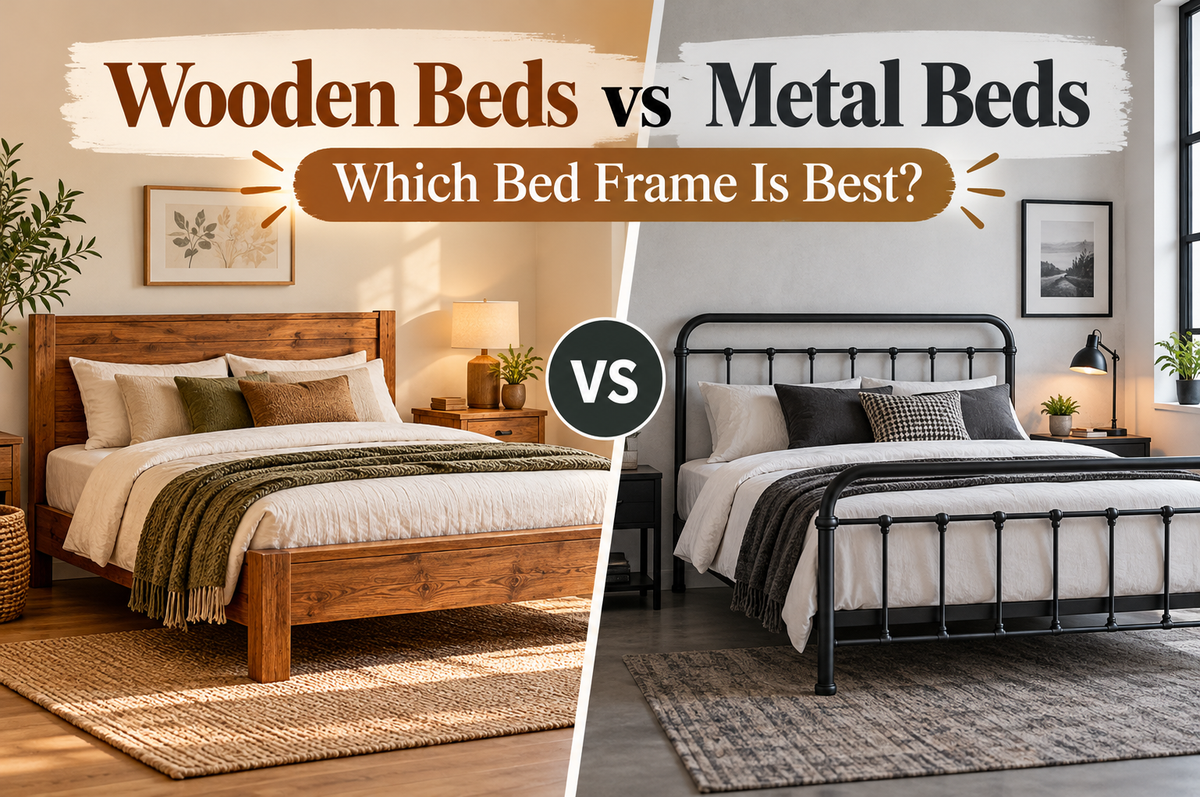
Wooden Beds vs Metal Beds: Which Bed Frame Is Best?
Choosing between wooden beds and metal beds sounds straightforward. One offers natural warmth and timeless character; the other promises sleek styling and a lightweight, practical design. But once you start comparing durability, mattress support, squeaking, maintenance and long-term value, the decision becomes considerably more interesting.
The truth? The best bed frame isn't necessarily wooden or metal. It's the one that's well constructed, supports your mattress properly and suits the way you live.
And there's more to consider than appearances.
Wooden Beds vs Metal Beds: The Essential Facts
If you're deciding between a wooden or metal bed frame, here's what you need to know before spending your money.
-
Durability: Both materials can last for years. Solid hardwood beds are known for their robust construction, while quality steel frames offer excellent structural strength. Joints, fixings and overall build quality matter just as much as the material.
-
Comfort: Neither wood nor metal automatically provides better sleep. Mattress quality, bed slats, centre support rails and frame stability have a greater influence on comfort.
-
Noise: Both wooden and metal bed frames can squeak. Loose bolts, worn joints and movement between components are common culprits.
-
Price: Basic metal frames are often relatively affordable, while solid wood beds can command higher prices. However, premium metal designs and budget wooden frames can reverse that comparison.
-
Style: Wooden beds bring warmth, texture and traditional appeal. Metal beds suit everything from minimalist bedrooms to vintage and industrial interiors.
-
Maintenance: Wood may require protection against moisture and scratches. Metal frames are generally easy to wipe clean, although damaged protective coatings can expose certain metals to corrosion.
-
Practicality: Metal frames can be easier to move when designed with lightweight components. Wooden beds vary considerably in weight, particularly when made from solid hardwood.
-
Sustainability: Responsibly sourced timber can be a renewable material, while steel is widely recyclable. The environmental impact depends on sourcing, manufacturing, transport and product lifespan.
The quick verdict: Choose a well-made wooden bed if you love natural materials, substantial construction and a timeless appearance. Consider a metal bed if you prefer slim profiles, decorative metalwork or a potentially lighter frame. Neither material guarantees better quality.
It's also worth remembering that wood and metal aren't your only options. Modern upholstered beds offer another approach, combining a padded, fabric-covered design with a supportive internal structure.
Wooden vs Metal Bed Frames: What's the Difference?
At first glance, the distinction is obvious: wooden beds use timber or wood-based materials for their construction, while metal beds typically use steel, iron or other metal components.
Look a little closer, though, and you'll discover that two frames made from the same material can perform very differently.
A solid oak bed with substantial side rails isn't comparable to an inexpensive MDF frame simply because both are described as wooden. Likewise, a reinforced steel bed with strong welded connections is a very different proposition from a lightweight metal frame assembled with numerous small bolts.
Construction quality is the deciding factor.
What Is a Wooden Bed Frame?
A wooden bed frame is constructed primarily from timber or wood-based materials, usually featuring a headboard, side rails, a footboard or end rail, and a mattress-supporting base.
Depending on the design, the base may use solid wooden slats, sprung slats or another compatible support system.
Common wooden bed frame materials include:
-
Oak: A popular hardwood valued for its distinctive grain, strength and traditional appearance.
-
Pine: A relatively lightweight softwood that is often more affordable than oak.
-
Beech: A dense hardwood frequently used in furniture and bed components.
-
Rubberwood: A timber used in furniture manufacturing, often chosen for its workable structure and consistent appearance.
-
Engineered wood: Manufactured boards, including MDF and particleboard, which can provide an economical alternative to solid timber.
Not all wooden beds are solid wood beds. Some combine solid timber with veneers or engineered components, and this distinction can affect strength, weight, price and repairability.
A well-built solid wood frame can be a long-term investment, particularly when its joints and fixings are designed to withstand regular use.
However, solid wood isn't automatically superior in every respect. It can be heavy, may respond to changes in humidity and sometimes requires more care than a metal alternative.
What Is a Metal Bed Frame?
A metal bed frame uses metal components to create the main load-bearing structure. Steel is particularly common, although iron and other metals are used in certain styles.
Metal frames can range from simple platform bases to elaborate traditional designs with decorative headboards and footboards.
Common types include:
-
Steel bed frames: Often chosen for their strength, versatility and relatively slim structural components.
-
Wrought iron-style beds: Decorative designs featuring curved metalwork, traditional detailing and a vintage appearance. Many modern examples are manufactured from steel rather than traditional wrought iron.
-
Powder-coated metal frames: Frames finished with a protective coating that adds colour and helps resist surface damage and corrosion.
-
Metal platform beds: Streamlined designs that support a mattress using metal slats, a grid or another suitable base.
One of the main metal bed frame advantages is the ability to create relatively slender designs without necessarily sacrificing structural strength.
That makes metal particularly appealing in bedrooms where visual space matters.
But there's a catch.
A slim-looking frame still needs sufficient support. The thickness of the steel, quality of the connections, positioning of support legs and suitability of the mattress base all influence how well it performs.
A metal bed isn't automatically stronger because it's made from steel, just as a wooden bed isn't automatically more durable because it uses hardwood.
Wooden vs Metal Beds: Key Differences at a Glance
| Feature | Wooden bed frames | Metal bed frames |
|---|---|---|
| Main materials | Solid timber or engineered wood | Steel, iron or other metals |
| Appearance | Natural, warm, traditional or contemporary | Sleek, industrial, vintage or minimalist |
| Strength | Depends on timber, dimensions and joints | Depends on metal thickness, design and connections |
| Durability | Can be excellent with quality construction | Can be excellent with quality construction |
| Noise | May creak as joints loosen or timber moves | May squeak as fixings loosen or components rub |
| Weight | Solid hardwood designs can be heavy | Often lighter in simple, open-frame designs |
| Maintenance | Protection from moisture and surface damage | Cleaning and protection from corrosion |
| Repairability | Some timber parts can be repaired or refinished | Some parts can be replaced; welded damage may be harder to repair |
| Typical pricing | Ranges from budget engineered wood to premium hardwood | Ranges from basic steel frames to premium decorative designs |
What matters most? Don't judge a bed frame by material alone. Look at the quality of its construction, how the mattress is supported and whether the design suits your bedroom.
Advantages and Disadvantages of Wooden Bed Frames
There's a reason wooden beds have remained popular for generations.
They feel familiar. They're versatile. And whether you're furnishing a country cottage or a contemporary home, natural timber can give a bedroom an inviting, grounded appearance.
Yet wooden bed frame advantages go well beyond aesthetics.
1. Timeless Style and Natural Warmth
Wood has character that manufactured finishes often try to imitate.
The grain of oak, the subtle knots in pine and the variation between individual pieces of timber create visual interest without needing elaborate decoration.
A wooden bed can become the centrepiece of a bedroom while remaining flexible enough to work with changing décor.
Consider how different finishes affect the atmosphere:
-
Natural oak: Warm, understated and well suited to Scandinavian or contemporary bedrooms.
-
Dark-stained timber: Rich and dramatic, particularly in traditional interiors.
-
Painted wood: Versatile for cottage-inspired, coastal or minimalist schemes.
-
Rustic pine: Relaxed, textured and suited to informal spaces.
Unlike highly distinctive furniture trends, simple wooden designs can remain visually relevant for years.
That's especially useful if you enjoy redecorating without replacing your main furniture.
2. Strong, Substantial Construction
One of the biggest reasons people consider wooden beds is their reputation for strength.
And that reputation can be deserved.
A properly constructed hardwood frame with substantial side rails, reliable joints and suitable mattress supports can provide excellent stability.
However, it's important to distinguish between the natural properties of timber and the strength of the finished bed.
A poorly designed hardwood bed may perform worse than a carefully engineered softwood or steel alternative.
When evaluating a wooden bed frame, look for:
-
Secure joints: Connections that hold the frame firmly together without excessive movement.
-
Appropriate side rail dimensions: Rails capable of supporting the intended mattress and occupants.
-
Reliable centre support: Particularly important for wider sleeping surfaces where specified by the manufacturer.
-
Suitable bed slats: Correctly spaced and strong enough for the mattress.
-
Clear weight guidance: Manufacturer specifications covering the intended use.
These details tell you considerably more about bed frame durability than a description such as "heavy-duty" or "premium quality".
3. Long-Term Repair and Refinishing Potential
A scratch on a solid timber bed doesn't always mean permanent damage.
Depending on the finish and construction, some wooden frames can be sanded, refinished or repaired.
Small surface marks may be treatable, while certain damaged components can sometimes be replaced without discarding the entire frame.
This gives repairable wooden beds a potential advantage when considering lifetime value.
That said, not every wooden frame offers the same flexibility.
Veneered panels can be difficult to sand without damaging the surface, and some engineered wood connections may not tolerate repeated disassembly particularly well.
If longevity is a priority, consider both the material and how easily individual parts can be maintained or replaced.
4. Versatility Across Bedroom Styles
Wooden bed frames aren't limited to chunky, traditional furniture.
Modern timber designs can feature low profiles, clean lines, floating-style bases and understated headboards.
Traditional designs may include sleigh-style curves, carved details or substantial posts.
This versatility means wooden beds can suit a wide variety of homes, from period properties to new-build apartments.
The key is choosing proportions that work with your space.
A large solid wood bed with a tall headboard can look impressive in a spacious bedroom, but the same design may dominate a smaller room.
What Are the Disadvantages of Wooden Bed Frames?
Wood offers plenty of benefits, but there are trade-offs worth understanding.
1. Solid wood can be expensive. Quality hardwood and more involved joinery can increase manufacturing costs, making some wooden beds more expensive than basic metal alternatives.
2. Some designs are heavy. Substantial timber frames may be difficult to carry upstairs, reposition or move between properties.
3. Moisture can affect timber. Wood naturally responds to changes in humidity. Depending on the species, construction and finish, it may expand, contract or warp under unsuitable conditions.
4. Scratches and dents are possible. Softer woods, particularly pine, can be more susceptible to dents than harder timber species.
5. Wooden beds can creak. Movement around joints, loose fittings or contact between components may create noise over time.
Worth remembering: A solid wood bed isn't automatically a lifetime purchase. Good materials help, but reliable joinery, appropriate support and regular maintenance are equally important.
For buyers who love a softer, more cushioned bedroom aesthetic but aren't committed to exposed timber, a padded bed frame may offer a different balance of appearance and practicality.
Advantages and Disadvantages of Metal Bed Frames
Metal beds have come a long way from the basic institutional-looking frames many people associate with them.
Today's designs can be elegant, minimal, decorative or strikingly contemporary.
And their appeal isn't purely visual.
A thoughtfully engineered steel frame can provide reliable mattress support while keeping the overall structure relatively streamlined.
1. Strong Support Without Bulky Components
Steel has a high strength-to-weight ratio, which allows manufacturers to create slim structural components capable of carrying substantial loads when correctly engineered.
This is one of the most practical metal bed frame advantages.
A metal frame may use narrow side rails and slender legs while still providing a stable foundation.
But remember: strength isn't determined by the material alone.
A thin metal tube, weak joint or poorly positioned support leg can compromise the performance of the entire bed.
Before purchasing, check the manufacturer's stated weight capacity, the number and position of support legs, and the construction of the mattress base.
2. Ideal for Minimalist and Industrial Bedrooms
Metal beds offer a distinctive visual quality.
Where wood introduces texture and warmth, metal can create clean silhouettes and architectural detail.
A simple black steel frame works particularly well in minimalist or industrial bedrooms. Curved metal headboards can introduce vintage charm, while light-coloured finishes may suit more traditional interiors.
Open metalwork can also make a room feel less visually crowded because you can see more of the wall behind the bed.
This can be particularly useful in compact bedrooms where a large solid headboard might feel overpowering.
3. Potentially Easier to Move and Reassemble
Many simple metal bed frames are designed around relatively lightweight components that can be dismantled for transport.
That can be useful for renters, students or anyone who moves house regularly.
However, not all metal beds are lightweight.
Large decorative iron-style beds and heavily reinforced steel designs can be substantial.
Likewise, some wooden frames are specifically designed for straightforward assembly.
Rather than assuming metal is always easier, consider the number of components, the assembly instructions and whether the connections are suitable for repeated dismantling.
4. Simple Cleaning and Everyday Maintenance
Nobody wants to spend their weekends maintaining a bed frame.
Fortunately, most metal beds require relatively little routine attention.
A soft cloth, occasional dusting and gentle cleaning are generally enough to keep a properly finished metal frame looking presentable.
Unlike untreated timber, powder-coated steel doesn't need regular oiling or polishing to maintain its finish.
There are still a few things to watch out for, though.
-
Rust and corrosion: Scratches that expose unprotected steel can create opportunities for corrosion, particularly in damp environments.
-
Loose connections: Bolts and fixings may need occasional checking to prevent movement and squeaking.
-
Damaged coatings: Chipped paint or powder coating can affect appearance and reduce surface protection.
-
Dust accumulation: Decorative metalwork and intricate headboards may have awkward corners that collect dust.
A well-maintained metal bed can remain attractive and functional for many years. The important thing is addressing small problems before they become bigger ones.
What Are the Disadvantages of Metal Bed Frames?
Metal beds offer genuine practical benefits, but they aren't perfect.
1. Some metal beds can become noisy. Squeaking may develop when bolted joints loosen or metal components rub against one another. This isn't inevitable, but it's worth considering when choosing a frame.
2. Lower-quality frames may feel unstable. Thin tubing, insufficient support legs or weak connections can result in wobbling and unwanted movement.
3. Metal can feel less inviting. Although largely a matter of personal taste, some people prefer the natural warmth and texture of timber to the cooler appearance of exposed metal.
4. Corrosion is possible. Steel and iron can rust if protective finishes become damaged and moisture reaches the underlying material.
5. Decorative designs can be difficult to clean. Intricate metal headboards may require more attention than simple wooden or upholstered alternatives.
6. Repair options vary. Loose bolts are usually straightforward to address, but damaged welded joints or bent structural components may require specialist attention or replacement.
The bottom line: A quality metal bed can be strong, stylish and easy to maintain. However, don't confuse a sleek appearance with structural reliability. The design, fixings and mattress support system deserve just as much attention as the finish.
Wooden Beds vs Metal Beds: Side-by-Side Comparison
So, how do these two popular bed frame materials compare when everyday living enters the picture?
Because a bed might look wonderful in a showroom, but that doesn't tell you how it will perform after months of sleeping, cleaning, moving furniture and changing the bedding.
Here's a practical comparison of the factors that matter most.
| Buying consideration | Wooden bed frame | Metal bed frame |
|---|---|---|
| Durability | Quality solid timber can offer excellent longevity | Well-engineered steel can provide excellent longevity |
| Strength | Depends on timber species, rail dimensions and joinery | Depends on metal thickness, joints and structural design |
| Mattress support | Often uses wooden slats or a compatible platform | May use metal slats, wooden slats or a platform |
| Comfort | Stable construction supports consistent mattress performance | Stable construction supports consistent mattress performance |
| Noise | Can creak as joints loosen or components move | Can squeak as connections loosen or components rub |
| Affordability | Budget engineered wood through to premium hardwood | Basic steel designs through to premium decorative frames |
| Appearance | Warm, natural, rustic, classic or contemporary | Minimalist, industrial, vintage or decorative |
| Maintenance | May require care against moisture and surface damage | Requires attention to coatings, fixings and potential rust |
| Assembly | Varies from simple flat-pack to substantial furniture | Often modular, but complexity varies by design |
| Weight | Solid hardwood designs can be heavy | Slim steel designs may be lighter |
| Repairability | Some solid timber components can be repaired or refinished | Bolts may be replaced, but structural damage can be difficult |
| Sustainability | Responsibly sourced timber is renewable | Steel is widely recyclable, although production is energy-intensive |
| Storage potential | Available with drawers or integrated storage | Some designs offer generous under-bed clearance |
| Long-term value | Depends on quality, durability and repairability | Depends on quality, durability and repairability |
Which Bed Frame Is Best Overall?
Neither material wins every category.
Wooden frames are particularly appealing if you value natural finishes, substantial furniture and the possibility of refinishing solid timber.
Metal frames make sense if you prefer open designs, relatively slim components and straightforward surface cleaning.
But if your priority is maximising bedroom storage, a conventional wooden or metal frame may not be the most practical option.
For example, ottoman beds provide a lift-up mattress platform that reveals storage space underneath. Rather than relying on the material alone, this type of design addresses a completely different bedroom requirement.
It's a useful reminder that the best bed frame is the one that solves your actual problems, not simply the one that wins a materials comparison.
Which Bed Frame Is More Durable and Stronger?
Durability is often the deciding factor when comparing wooden beds vs metal beds.
After all, a bed is one of the most frequently used pieces of furniture in your home.
It needs to support the combined weight of the mattress and occupants, cope with movement during sleep and maintain its stability over years of regular use.
But does wood or metal provide the strongest foundation?
Are Metal Beds Stronger Than Wooden Beds?
Not necessarily.
Steel is a strong engineering material, and its high strength-to-weight ratio allows manufacturers to create relatively slender structural components.
However, the strength of a complete metal bed depends on more than the properties of steel.
Consider two examples.
A lightweight steel frame made with thin tubing and poorly secured joints may flex or wobble under normal use.
Meanwhile, a substantial hardwood frame with reliable joinery, properly positioned support legs and strong side rails may feel exceptionally stable.
The reverse can also be true.
A carefully engineered steel platform bed may provide better structural support than a wooden frame made with weak connections or inadequate slats.
The material matters, but the construction determines how effectively that material performs.
When assessing bed frame strength, pay attention to:
-
Maximum weight capacity: Check the manufacturer's stated limit and whether it includes the mattress.
-
Centre support rails: Larger frames often need additional support through the middle.
-
Support legs: Their positioning helps distribute weight and reduce excessive movement.
-
Joint construction: Strong, secure connections help maintain stability.
-
Slat design: Thickness, spacing, flexibility and material all affect mattress support.
-
Frame dimensions: Larger sleeping surfaces require appropriate structural reinforcement.
Don't assume that a bed described as "heavy-duty" will automatically suit every sleeper.
Look for clear specifications and compatibility information rather than relying on marketing descriptions.
Solid Wood vs Engineered Wood: Does It Make a Difference?
Absolutely.
The term wooden bed covers a surprisingly broad range of materials.
Solid hardwood, softwood, plywood, MDF and particleboard don't share identical structural properties.
Solid hardwood beds can offer excellent strength and durability when the timber is appropriately selected and the frame is properly constructed.
Softwood beds, including many pine designs, may provide good value and reliable performance, although softer surfaces can be more susceptible to dents.
Engineered wood beds can also perform well when designed for their intended loads. However, the strength of fixings, resistance to moisture and ability to withstand repeated assembly can differ from solid timber.
This doesn't mean every solid wood bed is better than every engineered wood bed.
It means you should investigate what you're actually buying.
A frame's product description should ideally explain the materials used for its load-bearing components, rather than simply describing the entire product as wooden.
Which Lasts Longer: A Wooden or Metal Bed Frame?
There's no universal answer.
Both materials can provide many years of service when the frame is well designed, properly assembled and used within its intended limits.
A solid wood bed may be repairable if its surface becomes scratched or certain joints require attention.
A steel frame may resist everyday knocks well, but corrosion or damage to welded components can create different maintenance challenges.
The lifespan of either frame can be shortened by:
-
Exceeding the recommended weight capacity.
-
Incorrect assembly or missing fixings.
-
Poorly supported mattresses.
-
Loose joints that remain unrepaired.
-
Excessive moisture or unsuitable environmental conditions.
-
Repeated dismantling without following the manufacturer's instructions.
A more useful question than "Which material lasts longer?" is:
Which specific bed frame has the construction, support system and warranty to give me confidence in its longevity?
What's the Best Bed Frame for Heavy People?
For heavier sleepers, structural specifications should take priority over whether the frame is wooden or metal.
Look for a bed with an explicitly stated weight capacity that comfortably accommodates the intended occupants and mattress.
Pay particular attention to the support structure.
A wider frame with a strong centre rail, appropriately positioned legs and suitable slats may distribute loads more effectively than a design with limited support.
Also consider whether the mattress manufacturer specifies particular slat spacing or foundation requirements.
The best bed frame for durability is one that has been designed and rated for the loads it will experience.
Neither solid timber nor steel should be assumed suitable without checking those details.
Which Bed Frame Is More Comfortable and Quieter?
Imagine settling into bed after a long day.
You turn over, pull the duvet closer and finally get comfortable.
Then comes that unmistakable sound.
Creak.
Or worse, a sharp metallic squeak every time you move.
Nobody buys a bed expecting it to provide a soundtrack to their sleep.
That's why noise and comfort deserve careful consideration when choosing between a wooden vs metal bed frame.
Do Metal Bed Frames Squeak More Than Wooden Ones?
Metal beds have a reputation for squeaking, but the reality is more complicated.
A metal bed may develop noise when bolts loosen, connections move or components rub against one another.
Wooden frames can experience similar problems.
Timber joints may creak when movement occurs between surfaces, while slats can make noise if they shift against their supports.
Even a high-quality frame can become noisy if it hasn't been assembled correctly.
Common causes of bed frame squeaking include:
-
Loose bolts, screws or brackets.
-
Movement between connected components.
-
Slats rubbing against the frame.
-
Uneven flooring.
-
Worn or damaged joints.
-
Inadequate support beneath the mattress.
A noisy bed doesn't necessarily need replacing.
Sometimes the solution is as simple as checking and tightening the fixings according to the manufacturer's instructions.
Other situations may require repositioning slats, correcting an uneven base or replacing damaged components.
Neither wood nor metal is guaranteed to be silent. Good construction, proper assembly and occasional maintenance are far more reliable indicators of a quiet bed.
Which Bed Frame Is More Comfortable: Wood or Metal?
Here's something that surprises many shoppers.
The material of the outer frame doesn't automatically determine how comfortable your bed feels.
Much of your sleeping comfort comes from the mattress and the foundation supporting it.
A supportive mattress placed on an unsuitable base may not perform as intended.
Likewise, a high-quality wooden or metal frame can provide a stable foundation when its support system matches the mattress requirements.
For example:
-
Solid slats generally provide a firmer, less flexible foundation.
-
Sprung slats are designed to flex under load and can influence the overall feel of the sleep system.
-
Platform bases provide a continuous or near-continuous supporting surface, depending on their construction.
-
Poorly spaced slats may allow unsupported areas of the mattress to sag, potentially affecting comfort and durability.
Always check the mattress manufacturer's requirements before selecting a bed base.
This is especially important for memory foam, latex and hybrid mattresses, where the recommended foundation can vary between products.
Wooden Slats vs Metal Slats: Which Is Better?
Both wooden and metal slats can support a mattress effectively when designed and spaced correctly.
Wooden slats are common because they can provide reliable support while offering different degrees of flexibility depending on their design.
Metal slats can also form a strong mattress foundation, particularly when reinforced and appropriately positioned.
However, the material alone doesn't establish whether one system is better.
Consider these questions:
-
Are the slats compatible with your mattress?
-
Is the spacing within the mattress manufacturer's recommended limit?
-
Are the slats securely attached or correctly seated?
-
Is there adequate centre support for the bed size?
-
Can the slats support the expected weight without excessive bending?
For a double, king-size or super king-size bed, the design of the centre support system deserves particular attention.
Without suitable reinforcement, larger mattress foundations may be more vulnerable to excessive movement or deflection.
What About Comfort Beyond Traditional Bed Frames?
Comfort isn't always just about mattress support.
For some sleepers, being able to adjust their sleeping position is an important consideration.
An electrical bed offers a different approach, using an adjustable mechanism to raise or lower supported sections of the sleeping surface.
Depending on the design, this can make activities such as reading or sitting upright in bed more convenient.
It's a useful alternative to consider if your needs extend beyond choosing between timber and steel.
However, adjustable beds require compatible mattresses, and individual specifications should always be checked.
Comfort takeaway: Rather than asking whether wooden or metal beds are more comfortable, focus on mattress compatibility, slat spacing, frame stability and the type of support that suits your sleeping preferences.
Wooden vs Metal Bed Frames: Price and Value for Money
A bed frame can be one of the more significant furniture purchases you'll make.
And although everyone appreciates a good price, the cheapest option isn't always the most economical over time.
When comparing wooden bed costs with metal bed prices, it's important to understand what you're paying for.
Are Wooden Bed Frames More Expensive Than Metal Frames?
Often, but not always.
Basic metal bed frames can be relatively inexpensive because they may use standardised components and straightforward manufacturing processes.
Solid hardwood beds, particularly those with substantial timber sections and more complex joinery, can cost considerably more.
However, a premium decorative metal bed may be more expensive than a simple pine or engineered wood frame.
Prices vary according to:
-
Material quality and quantity.
-
Manufacturing methods.
-
Structural complexity.
-
Headboard and footboard design.
-
Finish and detailing.
-
Brand positioning.
-
Warranty and after-sales support.
-
Delivery and assembly requirements.
Rather than comparing two frames solely on their advertised prices, consider whether they offer equivalent features, construction quality and mattress support.
Is a Solid Wood Bed Worth the Money?
It can be.
A well-made solid timber bed may justify a higher upfront cost if you value its appearance, structural quality and potential for repair or refinishing.
But spending more doesn't automatically guarantee better value.
A less expensive metal frame that remains stable, suits your mattress and meets your needs for many years may represent an equally sensible purchase.
Think about cost per year of use.
For example, imagine one bed frame costs £300 and lasts six years, while another costs £600 and lasts fifteen years.
| Example | Purchase price | Assumed lifespan | Cost per year |
|---|---|---|---|
| Bed frame A | £300 | 6 years | £50 |
| Bed frame B | £600 | 15 years | £40 |
These figures are hypothetical illustrations, not product prices or predicted lifespans.
Although Bed B costs twice as much initially, its assumed longer lifespan produces a lower annual ownership cost.
Of course, nobody can guarantee exactly how long a bed will last.
That's why warranty coverage, replacement-part availability, construction quality and realistic maintenance requirements are worth considering alongside the price.
Don't Forget the Cost of Practicality
There's another consideration that rarely receives enough attention: how well the bed works in your home.
A beautiful frame that leaves you struggling for storage space might not be the best investment.
Similarly, a large, heavy bed that becomes difficult to move could create inconvenience if you regularly relocate.
Sometimes a different bed construction offers better everyday value than either a conventional wooden or metal frame.
For example, divan beds offer an alternative base design, with certain models incorporating storage drawers and other practical features.
Depending on the model, a divan can provide a compact, supportive foundation without the projecting side rails found on some traditional bedsteads.
The smartest purchase isn't necessarily the cheapest frame. It's the bed that provides the best combination of support, functionality, appearance and long-term value for your circumstances.
Which Bed Frame Is Easier to Maintain and Assemble?
A bed frame might look fantastic on delivery day, but what happens six months later?
Dust settles. Fixings loosen. Furniture gets moved. And eventually, you might need to dismantle the whole thing to decorate or move house.
That's when the practical differences between wooden and metal beds become particularly noticeable.
Fortunately, neither material is especially difficult to maintain when properly cared for.
Wooden Bed Frame Maintenance: What Should You Expect?
Wooden beds generally benefit from gentle, consistent care.
The exact maintenance requirements depend on whether the frame is made from solid timber, veneered wood or engineered materials, as well as the finish applied during manufacturing.
For most wooden bed frames, a few straightforward habits can help preserve their appearance and structural stability.
-
Dust regularly: Use a soft, dry or slightly damp cloth to remove dust without scratching the finish.
-
Avoid excessive moisture: Standing water and prolonged dampness can damage certain wooden surfaces and cause swelling or warping.
-
Protect against direct heat: Positioning timber furniture immediately beside radiators or other strong heat sources may contribute to drying and movement.
-
Check joints periodically: Tighten accessible fixings according to the manufacturer's guidance if movement develops.
-
Use suitable cleaning products: Harsh chemicals or abrasive cleaners may damage painted, lacquered or oiled surfaces.
-
Inspect the slats: Look for cracks, excessive bending or movement that could affect mattress support.
Solid timber can naturally expand and contract as humidity changes.
This doesn't necessarily indicate poor quality. It's a characteristic of wood.
However, maintaining reasonably stable indoor conditions can help reduce excessive movement.
One particularly useful advantage of solid wood is repairability. Depending on the construction and finish, minor scratches or worn surfaces may be repairable without replacing the entire bed.
That isn't always possible with veneers or laminated engineered wood.
Metal Bed Frame Maintenance: Is It Easier?
Metal frames are often straightforward to clean.
Most powder-coated steel designs can be wiped down with a soft cloth and a mild cleaning solution suitable for the finish.
Unlike certain natural timber finishes, they generally don't require periodic oiling or waxing.
However, metal beds have their own maintenance considerations.
Keep an eye on these four areas:
-
Bolts and connections: Check for looseness, especially if the bed begins to move or squeak.
-
Protective coatings: Address chips or scratches appropriately to reduce the risk of exposed steel corroding.
-
Moisture: Avoid leaving susceptible metal components wet, particularly around joints and concealed areas.
-
Support components: Inspect metal slats, brackets and legs for damage or unwanted movement.
A powder-coated metal frame can be a convenient choice for a busy household, but it shouldn't be considered completely maintenance-free.
Which Bed Frame Is Easier to Assemble?
There's no guaranteed winner.
Some metal bed frames arrive as a collection of lightweight rails, legs and brackets that can be assembled using basic tools.
Others feature numerous connections and require careful alignment.
Wooden frames vary just as much.
A simple wooden platform bed may be relatively straightforward to assemble, while a substantial hardwood bed with a large headboard and complex joinery could require considerably more effort.
Before purchasing, consider:
-
How many separate components are included?
-
Can the bed be assembled by one person, or are two people recommended?
-
Are tools provided?
-
Can the frame be dismantled and reassembled without damaging the connections?
-
Will the largest components fit through your doors, hallways and staircase?
-
Does the manufacturer provide clear assembly instructions?
If you're furnishing a rental property or expect to move regularly, repeated assembly is particularly important.
A frame with durable, replaceable fixings may be more practical than one that relies on connections vulnerable to wear during dismantling.
Practical verdict: Metal frames may offer an advantage when lightweight, modular construction is important. Wooden beds can be equally convenient when designed with straightforward assembly and reliable fixings.
Wooden vs Metal Beds: Which Style Suits Your Bedroom?
A bed isn't simply somewhere to sleep.
It's often the largest piece of furniture in the bedroom, making it a defining feature of the entire space.
Choose the wrong design and even an otherwise beautifully decorated room can feel unbalanced.
Choose well, and everything suddenly works together.
The good news? Both wooden and metal bed frames can look exceptional.
They simply create different impressions.
Wooden Beds: Warmth, Texture and Timeless Appeal
Wood naturally introduces warmth into a bedroom.
Even a relatively simple timber frame can create a welcoming atmosphere through its colour, grain and texture.
This makes wooden beds particularly suitable for interiors that emphasise comfort, natural materials and understated elegance.
Popular bedroom styles for wooden beds include:
-
Scandinavian: Pale timber, simple lines, neutral bedding and uncluttered furniture.
-
Rustic: Natural grain, substantial frames and earthy colours.
-
Traditional: Darker finishes, decorative headboards and classic proportions.
-
Contemporary: Streamlined oak or painted timber paired with modern accessories.
-
Coastal: Light-coloured wood, soft whites and relaxed textures.
A wooden bed can also provide an appealing contrast against painted walls or upholstered furniture.
For example, a natural oak frame paired with cream bedding, textured cushions and warm lighting creates a softer atmosphere than a stark, monochrome arrangement.
However, proportions matter.
A chunky timber frame may feel imposing in a compact bedroom, especially when combined with oversized bedside cabinets.
In smaller spaces, consider a lower headboard, lighter finish or more streamlined construction.
Metal Beds: Minimalist, Industrial and Vintage Character
Metal beds can create an entirely different atmosphere.
Their slender components and open headboard designs often make them visually lighter than solid furniture.
That doesn't mean they're limited to modern interiors.
In fact, metal beds can work beautifully across several contrasting styles.
Industrial bedrooms benefit from black steel frames, exposed brick, dark accents and simple furniture.
Minimalist spaces suit clean-lined metal platform beds with understated finishes.
Vintage-inspired interiors can accommodate curved headboards, decorative metalwork and traditional iron-style designs.
Contemporary bedrooms may benefit from slim frames that complement modern lighting and uncluttered layouts.
A metal bed can also help prevent a smaller bedroom from feeling overcrowded.
An open headboard allows more of the wall behind it to remain visible, potentially creating a greater sense of space.
But metal isn't always the visually lighter option.
A heavily decorated frame with tall posts and intricate detailing may dominate a room just as much as a substantial wooden bed.
What About Upholstered Bed Frames?
Sometimes neither exposed wood nor metal delivers the atmosphere you're trying to create.
Perhaps you want something softer.
A padded headboard to lean against while reading. Fabric textures that complement your curtains. A bedroom that feels cosy without relying on heavy timber furniture.
This is where upholstered designs offer an appealing alternative.
They can create a more cushioned appearance while concealing much of the internal frame construction.
The important distinction is that upholstery describes the external finish, not necessarily the load-bearing structure underneath.
An upholstered bed may incorporate timber, engineered wood, metal components or a combination of materials.
So if you're comparing bed frame strength, it's still worth checking how the bed is constructed beneath the fabric.
How to Choose the Right Style
Before deciding, ask yourself three questions.
1. What atmosphere do I want?
For natural warmth, timber may be appealing. For a more architectural or open appearance, metal could work better. For softness and texture, upholstery may suit your preferences.
2. How much space do I have?
Consider the complete bed dimensions, not just the mattress size.
Headboards, footboards and projecting side rails can increase the space a frame occupies.
3. Will the design still suit me in five years?
A highly decorative bed may be perfect for your current bedroom, but a more versatile design could make future redecorating easier.
Ultimately, bedroom aesthetics are personal.
The best-looking bed is the one that complements your space without compromising everyday practicality.
Which Bed Frame Is More Sustainable: Wood or Metal?
Sustainability is becoming an increasingly important consideration when buying furniture.
And understandably so.
A bed frame is a substantial household purchase, often involving significant quantities of raw materials, manufacturing processes and transport.
But when comparing wooden beds vs metal beds, which material is the more environmentally responsible choice?
The answer depends on much more than whether the frame comes from a tree or a metal factory.
Are Wooden Beds More Environmentally Friendly?
Wood is a renewable material when forests are responsibly managed.
Trees absorb carbon dioxide as they grow, and carbon remains stored in timber products during their useful life.
This gives wooden furniture certain environmental advantages.
However, the sustainability of a wooden bed depends on several factors.
These include:
-
The origin of the timber.
-
Whether forests are responsibly managed.
-
Manufacturing processes and energy consumption.
-
Adhesives, coatings and other treatments.
-
Transportation distances.
-
Product durability and eventual disposal.
When evaluating timber sourcing, certification schemes such as FSC can provide useful information about responsible forest management and supply-chain controls.
However, certification alone doesn't establish the complete environmental impact of a finished bed.
A wooden frame that requires frequent replacement may also be less desirable than a longer-lasting alternative.
Are Metal Beds Sustainable?
Steel production can be energy-intensive and generate substantial greenhouse gas emissions.
That is an important consideration.
However, steel also offers advantages.
It's widely recyclable, and recycled steel can be used in new manufacturing processes.
A durable metal bed frame that remains in use for many years may therefore represent a reasonable long-term choice.
Its overall environmental impact will depend on factors such as:
-
The proportion of recycled material used.
-
Manufacturing methods.
-
Energy sources.
-
Protective finishes.
-
Transportation.
-
Product lifespan.
-
Whether components can be reused or recycled.
Recyclability doesn't necessarily mean a particular bed frame has a lower carbon footprint than a wooden alternative.
A meaningful comparison would require product-specific environmental information.
The Most Sustainable Bed May Be the One You Keep
There's a practical point that's easy to overlook.
Replacing furniture frequently consumes additional resources, regardless of the material.
Choosing a durable bed that meets your needs for years can reduce the need for repeated purchases.
Before buying, consider whether the design is likely to remain suitable as your circumstances change.
Can it be maintained?
Are replacement parts available?
Is the construction strong enough for long-term use?
Could the frame be repaired rather than discarded?
Sustainability verdict: Responsibly sourced wood and recyclable metal both have environmental advantages. Prioritise transparent material information, durable construction and a bed you're likely to keep rather than assuming one material is automatically greener.
Which Bed Frame Is Best for Your Mattress and Storage Needs?
Here's where the conversation becomes especially practical.
Because even the strongest, most attractive bed frame can be the wrong purchase if it doesn't support your mattress correctly or fit your bedroom.
Before choosing between wood and metal, think about how you actually use your bed.
Mattress Compatibility: Does the Frame Material Matter?
The outer frame material is usually less important than the support system beneath your mattress.
A memory foam mattress, for example, may require a firm, evenly supportive foundation with slats spaced within the manufacturer's specified limits.
Hybrid and pocket-sprung mattresses can have their own foundation requirements.
These requirements vary between manufacturers and products, so avoid assuming that one slat arrangement suits every mattress.
When checking compatibility, pay attention to:
-
Mattress dimensions: Confirm the bed and mattress use matching UK size specifications.
-
Slat spacing: Follow the mattress manufacturer's maximum recommended gap.
-
Foundation type: Check whether solid slats, sprung slats or a platform base are permitted.
-
Centre support: Ensure the bed provides adequate reinforcement where required.
-
Weight capacity: Consider the combined weight of the mattress and sleepers.
-
Warranty conditions: Some mattress warranties specify acceptable foundations.
A suitable bed base helps the mattress perform as intended and may reduce the risk of unsupported areas developing excessive sagging.
Which Bed Frame Is Better for Under-Bed Storage?
Traditional wooden and metal bed frames can both provide useful storage space underneath.
However, the amount of usable space depends on the frame's height, leg positioning and structural design.
Some metal platform beds offer generous clearance beneath the mattress.
Certain wooden bedsteads also provide room for storage boxes, baskets or low-profile containers.
But under-bed clearance isn't always the most efficient storage solution.
In smaller bedrooms, loose storage containers can be awkward to access, especially when the bed sits close to a wall.
This is why integrated storage deserves consideration.
Common bed storage options include:
-
Under-bed clearance: Open space beneath a raised bed frame.
-
Storage drawers: Built-in compartments that slide out from the base.
-
Ottoman storage: A lifting mattress platform that reveals a larger enclosed storage compartment.
-
Divan storage: Drawers or other storage features integrated into certain divan bases.
The best option depends on your available floor space and what you intend to store.
For example, an ottoman design can be useful when there's insufficient space beside the bed to open drawers.
However, you must also account for the lifting mechanism, mattress compatibility and access requirements.
What Is the Best Bed Frame for a Small Bedroom?
In compact bedrooms, every centimetre counts.
A bed with a large decorative headboard, substantial footboard or projecting side rails can make the room feel crowded.
A streamlined metal frame may create a lighter visual effect, but that doesn't automatically make it the most space-efficient option.
A compact wooden platform or a well-proportioned divan may occupy less floor space than a decorative metal bedstead.
For smaller rooms, prioritise:
-
Overall external dimensions.
-
Headboard height and thickness.
-
Space required to walk around the bed.
-
Access to wardrobes and drawers.
-
Under-bed or integrated storage.
-
Ease of changing bedding.
-
Suitable mattress support.
Measure your bedroom carefully before purchasing.
Remember to account for skirting boards, radiators, door swings and any furniture positioned beside the bed.
A few extra centimetres can make a noticeable difference to how comfortably the room functions.
Wooden Beds vs Metal Beds: Which Should You Choose?
We've compared the materials, examined their strengths and weaknesses, and looked at everything from squeaking and maintenance to sustainability and mattress support.
So, which bed frame is best?
The answer depends on what matters most to you.
Choose a Wooden Bed Frame If...
A wooden bed may be the better choice if you:
-
Love natural materials and visible wood grain.
-
Prefer a warm, traditional or Scandinavian bedroom aesthetic.
-
Want substantial furniture with a solid appearance.
-
Value the potential to repair or refinish certain timber components.
-
Are comfortable with the weight and maintenance requirements of your chosen frame.
-
Prefer a design that can complement changing bedroom décor.
A well-constructed solid wood bed can be an excellent long-term purchase.
Just remember that the timber species, joinery, support system and manufacturing quality all affect its performance.
Choose a Metal Bed Frame If...
A metal bed may suit you better if you:
-
Prefer minimalist, industrial or vintage-inspired designs.
-
Want a relatively slim, open-frame appearance.
-
Are considering a straightforward, modular bed construction.
-
Prefer surfaces that are generally easy to wipe clean.
-
Want to explore affordable frame options.
-
Appreciate the strength-to-weight potential of engineered steel components.
A quality metal frame can offer reliable support and attractive styling.
However, it's still essential to check the fixings, support structure, protective finish and recommended weight capacity.
Consider an Alternative Bed Design If...
Neither wooden nor metal bedsteads fully meet your requirements.
Perhaps your bedroom needs more storage.
Maybe you prefer a padded headboard.
Or perhaps you're looking for an adjustable sleeping surface rather than a conventional fixed frame.
Different bed constructions can address these needs without making exposed timber or metal the defining feature.
At Sovo Beds, choosing the right bed is about finding a design that works for your bedroom and everyday routine. Exploring the available sizes, upholstery options, storage configurations and support features can help narrow down the choice.
Final Verdict: Quality Matters More Than Material
If there's one thing worth remembering from this comparison, it's this:
A well-made bed frame is usually a better investment than a poorly made one, regardless of whether it's wooden or metal.
Solid wood can offer natural beauty, substantial construction and potential repairability.
Metal can provide strong, streamlined designs with practical maintenance advantages.
Neither material guarantees greater comfort, a longer lifespan or quieter performance.
Those outcomes depend on the complete bed.
Look beyond the appearance. Check the mattress support, structural connections, dimensions, assembly requirements and warranty.
And most importantly, choose a bed that suits how you live.
Because the right bed frame shouldn't simply look good on the day it arrives.
It should continue doing its job, night after night.
Frequently Asked Questions About Wooden and Metal Beds
Are Wooden Beds Better Than Metal Beds?
Not necessarily. Wooden beds can offer natural warmth, substantial construction and repairability, while metal beds can provide streamlined styling, strong structural components and straightforward cleaning. The better choice depends on construction quality, mattress compatibility, personal preferences and budget.
Which Lasts Longer, a Wooden or Metal Bed Frame?
Both can last for many years when properly constructed and maintained. Solid timber frames may offer refinishing and repair opportunities, while quality steel frames can provide excellent structural durability. Neither material has a guaranteed lifespan advantage across all products.
Are Metal Beds Stronger Than Wooden Beds?
Not automatically. Steel has excellent structural properties, but the strength of a finished bed depends on its design, component dimensions, joints and support system. A well-constructed hardwood bed may outperform a poorly engineered metal frame, and vice versa.
Do Metal Bed Frames Squeak More Than Wooden Ones?
Both types can develop squeaks. Metal frames may make noise when connections loosen or components rub together, while wooden frames can creak around joints or slats. Correct assembly and regular checks can help minimise noise.
Which Bed Frame Is More Comfortable, Wood or Metal?
Neither material is inherently more comfortable. Mattress quality, foundation compatibility, slat spacing and frame stability have a greater influence on the overall sleeping experience.
Are Wooden Bed Frames More Expensive Than Metal Frames?
Basic metal frames are often relatively affordable, while solid hardwood beds can be more expensive. However, prices vary considerably according to construction, materials, design and brand. Premium metal beds may cost more than simple wooden alternatives.
Can Metal Bed Frames Rust?
Yes. Steel and iron can corrode when exposed to moisture, particularly if protective coatings are damaged. Proper finishes, suitable cleaning and prompt attention to exposed surfaces can help reduce the risk.
Do Wooden Bed Frames Warp Over Time?
Wood can expand, contract or warp in response to moisture and humidity changes. The extent depends on the timber, construction, finish and environment. Maintaining suitable indoor conditions and avoiding excessive moisture can help.
What Is the Best Bed Frame for a Heavy Mattress?
Choose a frame with a suitable manufacturer-stated weight capacity, reliable centre support and a mattress-compatible foundation. The combined weight of the mattress and occupants should be considered. Both wooden and metal frames can be suitable when correctly designed.
Can You Use Any Mattress on a Metal Bed Frame?
No. Mattress compatibility depends on the support system, not simply the frame material. Check the mattress manufacturer's guidance on slat spacing, foundation type, dimensions and weight support.
Are Wooden Beds More Environmentally Friendly?
Responsibly sourced timber can be a renewable material, while steel offers substantial recycling potential. The environmental impact of either bed depends on sourcing, manufacturing, transport, lifespan and disposal. Neither material is automatically the most sustainable choice.
Are Solid Wood Beds Worth the Money?
A quality solid wood bed can be worthwhile if you value its appearance, structural design and potential for repair or refinishing. However, price alone doesn't guarantee longevity. Construction quality, warranty coverage and suitability for your needs remain important.
Do Wooden Bed Frames Attract Bed Bugs?
Wood itself doesn't attract bed bugs. These insects seek access to people and can hide in cracks, joints and crevices in wooden, metal or upholstered furniture. Bed frame material alone doesn't determine whether an infestation occurs.
Are Metal Beds Colder Than Wooden Beds?
Metal generally feels cooler to the touch than wood because it transfers heat more readily. However, this doesn't mean a metal bed will make your mattress or sleeping environment significantly colder. Bedding, mattress construction and room temperature are much more relevant to sleeping warmth.
Which Bed Frame Is Best for a Small Bedroom?
A compact frame with minimal external dimensions is often the most practical choice. Slim metal designs can look visually lighter, while divan and storage beds may offer space-saving benefits. Measure the complete bed footprint and available walking space before deciding.
How Long Should a Quality Bed Frame Last?
There's no universal lifespan because durability varies according to materials, construction, weight loads, usage and maintenance. A quality frame should provide reliable support over years of normal use, but it's better to evaluate its specifications and warranty than rely on a fixed lifespan estimate.
Find the Right Bed for Your Bedroom
Wooden and metal beds each have their place. But choosing a bed shouldn't mean compromising on the features that matter to you.
Whether you're looking for a stylish centrepiece, practical storage, a supportive foundation or a softer upholstered finish, focus on quality construction and a design that suits your home.
Explore the bed styles available from Sovo Beds and consider which combination of comfort, appearance and everyday functionality best meets your needs.
A great bedroom starts with a bed that feels right for you — not just one that looks right in a photograph.