Upholstered Beds: Pros, Cons and What to Know Before Buying
Upholstered Beds at a Glance: What You Need to Know
Upholstered beds bring softness, texture and a touch of luxury into the bedroom. With fabric-covered frames, cushioned headboards and countless design possibilities, they're an appealing alternative to traditional wooden or metal beds. But are they practical for everyday life?
Here's what matters before you buy:
-
Comfort: Padded headboards provide a softer surface for sitting up, reading or watching television in bed.
-
Style: From sumptuous velvet to understated linen-look fabrics, upholstered bed frames complement everything from contemporary interiors to classic bedrooms.
-
Practicality: Fabric upholstery can collect dust, pet hair and occasional stains, so regular cleaning is important.
-
Durability: A well-constructed frame with quality upholstery can provide years of use, although fabric wear depends on material, usage and maintenance.
-
Storage: Some designs incorporate ottoman lift-up storage, helping you make better use of limited bedroom space.
-
Cost: Prices vary according to frame construction, fabric, headboard design and additional features.
-
Best suited to: Anyone seeking a comfortable, stylish bedroom centrepiece who doesn't mind a little extra fabric care.
The bottom line? Upholstered beds can be an excellent investment in bedroom comfort and appearance. However, the right choice depends on your lifestyle, available space, preferred fabric and expectations around upkeep.
Let's explore what makes these beds so popular, where they fall short and how to decide whether one belongs in your bedroom.
What Is an Upholstered Bed?
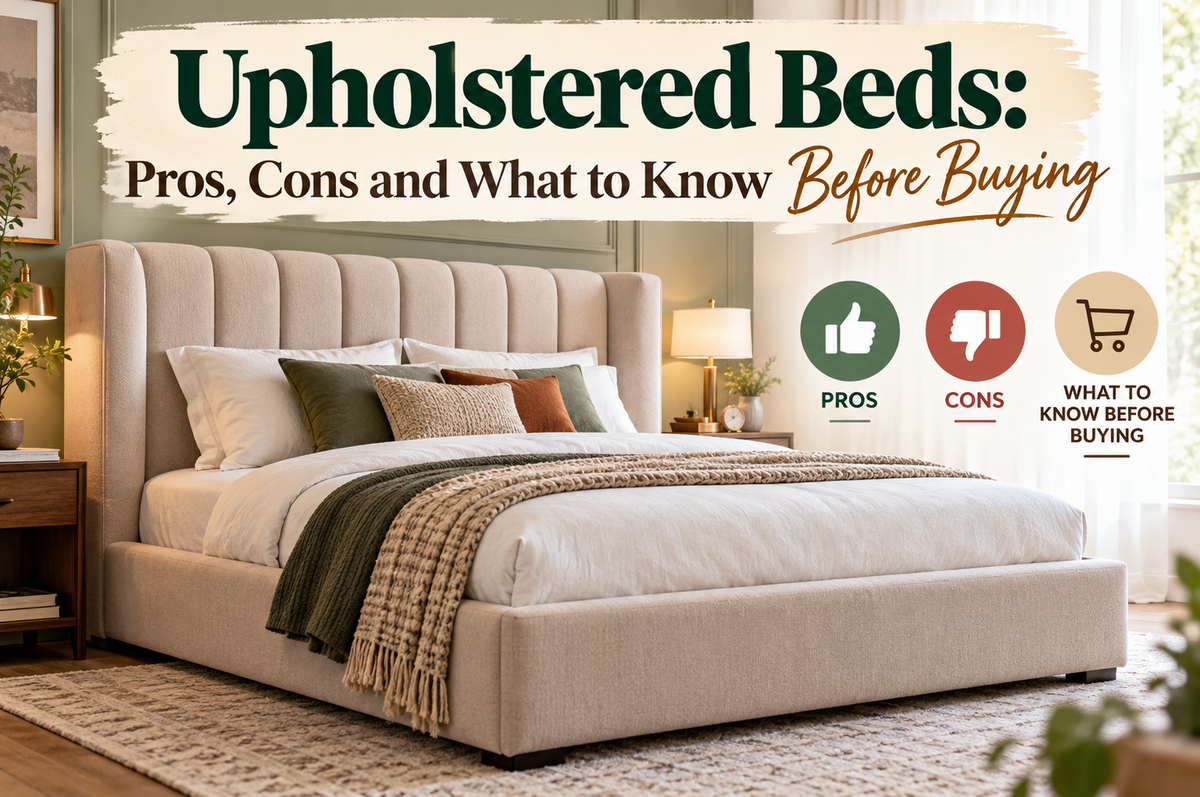
An upholstered bed is a bed frame covered partially or entirely in fabric, with a layer of padding typically placed between the upholstery and the underlying structure.
Unlike traditional wooden or metal frames, where the structural material remains visible, upholstered beds use textiles to create a softer, more inviting appearance.
The most recognisable feature is usually the upholstered headboard. Often generously padded, it provides a cushioned surface behind your pillows while adding height, texture and personality to the room.
Some designs feature fabric-covered side rails and footboards, creating a coordinated appearance from head to toe. Others combine upholstered elements with exposed legs or more streamlined frames.
What Is an Upholstered Bed Made From?
Although the fabric attracts most of the attention, there's considerably more going on underneath.
A typical upholstered bed frame consists of several components:
-
Internal frame: Usually constructed from wood, engineered timber, metal or a combination of materials to provide structural support.
-
Padding: Foam or fibre padding creates the cushioned finish associated with upholstered furniture.
-
Outer upholstery: Fabric covers the padded sections, determining much of the bed's appearance, texture and cleaning requirements.
-
Bed base: Depending on the design, a slatted or platform-style base supports the mattress.
-
Headboard: A padded panel that may feature stitching, tufting, vertical channels or decorative wings.
The quality of these components matters just as much as the upholstery itself.
A beautiful velvet bed with a poorly constructed internal frame may disappoint long before its fabric begins showing wear. Equally, a sturdy frame with unsuitable upholstery might prove frustrating in a busy household.
Buying tip: Don't judge an upholstered bed solely by its appearance. Ask about the internal frame, mattress support, fabric care requirements and overall dimensions before making your decision.
If you're exploring different styles, the wider Sovo Beds bed collection provides a useful starting point for comparing bed designs and configurations.
Are Upholstered Beds the Same as Fabric Beds?
Generally, yes.
The terms fabric beds, fabric bed frames and upholstered beds are often used interchangeably, particularly when describing beds with textile-covered headboards and frames.
However, there's a small distinction worth understanding.
An upholstered bed can technically feature leather or faux leather rather than woven fabric. Meanwhile, a fabric bed specifically refers to a frame covered in textile upholstery.
For most shoppers, though, both terms describe the same broad category of soft, padded bed designs.
What Are the Advantages of Upholstered Beds?
There's a reason upholstered beds have become such a familiar feature in beautifully designed bedrooms.
They offer something that exposed timber and metal frames don't always achieve: a combination of tactile comfort, visual warmth and decorative flexibility.
Yet their appeal extends beyond appearance.
Here are the main advantages of upholstered beds and what those benefits mean in everyday use.
1. A Comfortable, Padded Headboard
Picture a slow Sunday morning.
You've made a coffee, opened your book and settled back against the headboard. Instead of leaning against a hard wooden panel or cold metal bars, you're supported by a soft, cushioned surface.
That's one of the most immediately noticeable benefits of an upholstered bed.
A padded headboard creates a more comfortable surface for activities such as:
-
Reading before going to sleep.
-
Watching television from bed.
-
Enjoying breakfast in bed.
-
Sitting upright with pillows behind your back.
-
Relaxing without needing to lean directly against a hard wall.
This can be particularly appealing if your bedroom doubles as a place to unwind during the day.
However, padding thickness and firmness vary considerably between designs. Some headboards are plush and generously cushioned, while others have relatively thin padding intended primarily for appearance.
It's also worth remembering that a padded headboard doesn't replace proper back support.
If you regularly sit upright for long periods, supportive pillows and a comfortable sitting position still matter.
What to look for: A headboard with suitable padding, comfortable height and enough stability to withstand regular use.
2. They Create a Luxurious Bedroom Aesthetic
Few pieces of bedroom furniture can change the atmosphere of a room quite like an upholstered bed.
A tall, fabric-covered headboard immediately draws the eye. Add subtle stitching, elegant proportions or a richly textured finish, and even a relatively simple bedroom can feel more considered.
This makes upholstered beds especially effective as a bedroom focal point.
They can introduce:
-
Visual softness: Fabric helps balance hard flooring, painted walls and angular furniture.
-
Texture: Velvet, woven fabrics and bouclé add depth without requiring bold patterns.
-
Colour: Upholstery allows you to introduce complementary or contrasting shades.
-
Decorative detail: Panelled, button-tufted and wingback designs add architectural interest.
-
A coordinated finish: Fabric-covered rails and headboards can make the bed appear like one cohesive piece of furniture.
A neutral upholstered bed can create the relaxed atmosphere of a boutique hotel. A dramatic, tall headboard can produce something altogether more glamorous.
Neither approach requires an elaborate bedroom makeover.
Sometimes, changing the bed is enough to transform how the entire room feels.
3. Upholstered Beds Come in a Wide Range of Styles
Not everyone wants the same bedroom.
Some prefer clean lines, pale colours and minimal decoration. Others love rich textures, statement headboards and a more traditional sense of luxury.
One of the greatest advantages of upholstered beds is how easily they accommodate different interior styles.
| Upholstered bed style | Key characteristics | Particularly suited to |
|---|---|---|
| Panelled headboard | Horizontal or vertical padded sections | Modern, contemporary bedrooms |
| Button-tufted bed | Decorative buttons and quilted detailing | Classic, glamorous interiors |
| Wingback bed | Raised sides extending from the headboard | Statement bedroom designs |
| Low-profile bed | Lower frame and understated proportions | Minimalist spaces |
| Tall headboard bed | Increased height and visual impact | Larger bedrooms and feature walls |
| Upholstered ottoman bed | Fabric-covered design with lift-up storage | Bedrooms needing additional storage |
The secret is choosing a design that complements your room rather than overwhelms it.
For example, a very tall wingback headboard might look stunning in a spacious bedroom with high ceilings. In a compact room, however, a lower, simpler design could create a more balanced appearance.
Likewise, elaborate button detailing can look beautiful in traditional interiors but may feel overly decorative in a minimalist setting.
A useful rule: Consider the bed's shape and proportions before deciding on the fabric colour. A well-proportioned frame will usually have a greater impact than an on-trend shade alone.
4. Fabric Colours and Textures Offer More Design Flexibility
Wooden beds are naturally influenced by timber species, grain patterns and finishes. Metal beds tend to rely on their shape and painted or metallic surfaces.
Upholstered beds open up another world of possibilities.
Their fabric coverings can introduce subtle texture, softness and colour in ways that rigid materials cannot easily replicate.
Consider how different upholstery choices affect a bedroom:
Neutral woven fabrics
Beige, cream, oatmeal and soft grey upholstery can create a calm, versatile foundation. These colours work particularly well with natural wood, warm lighting and understated bedding.
Velvet finishes
A velvet upholstered bed can introduce a richer, more luxurious appearance. The fabric's directional pile reflects light differently depending on the angle, creating depth and subtle variations in tone.
Linen-look upholstery
Linen and linen-effect fabrics are popular for their relaxed, natural appearance. Their visible weave can complement Scandinavian, coastal and contemporary interiors.
Textured bouclé
Bouclé has a looped, tactile surface that gives upholstered furniture a distinctive appearance. It's particularly effective in soft, neutral bedrooms where texture takes priority over bold colour.
Darker fabrics
Charcoal, navy and other deep shades can create contrast against pale walls, helping the bed become a stronger focal point.
Of course, appearance is only part of the equation.
A delicate, heavily textured fabric may not be the most practical choice for a household with pets. Similarly, a pale upholstery colour might require more attention if the bed is regularly exposed to spills or marks.
We'll explore the practical differences between upholstered bed materials later in this guide.
5. They Can Make a Bedroom Feel Warmer and More Inviting
A bedroom should feel like somewhere you want to spend time.
While wooden and metal frames can look beautiful, their exposed surfaces create a different visual effect from fabric-covered furniture.
Upholstery softens the overall appearance of a room.
The padded surfaces, woven textures and gentle contours can make a bedroom feel less stark, especially when paired with soft lighting, curtains and layered bedding.
This is particularly useful in rooms dominated by hard surfaces.
For example, a bedroom with laminate flooring, plain walls and simple bedside tables might benefit from a generously upholstered headboard that introduces texture and visual warmth.
There may also be a modest acoustic benefit.
Soft furnishings absorb some sound, and upholstered surfaces can reduce certain reflections compared with hard materials. However, an upholstered bed shouldn't be expected to soundproof a bedroom or eliminate noise from an unstable frame.
Its most reliable contribution is aesthetic and tactile: it makes the space look and feel softer.
6. Some Upholstered Beds Provide Valuable Hidden Storage
A stylish bed doesn't have to sacrifice practicality.
One particularly useful option is an upholstered frame incorporating storage beneath the mattress.
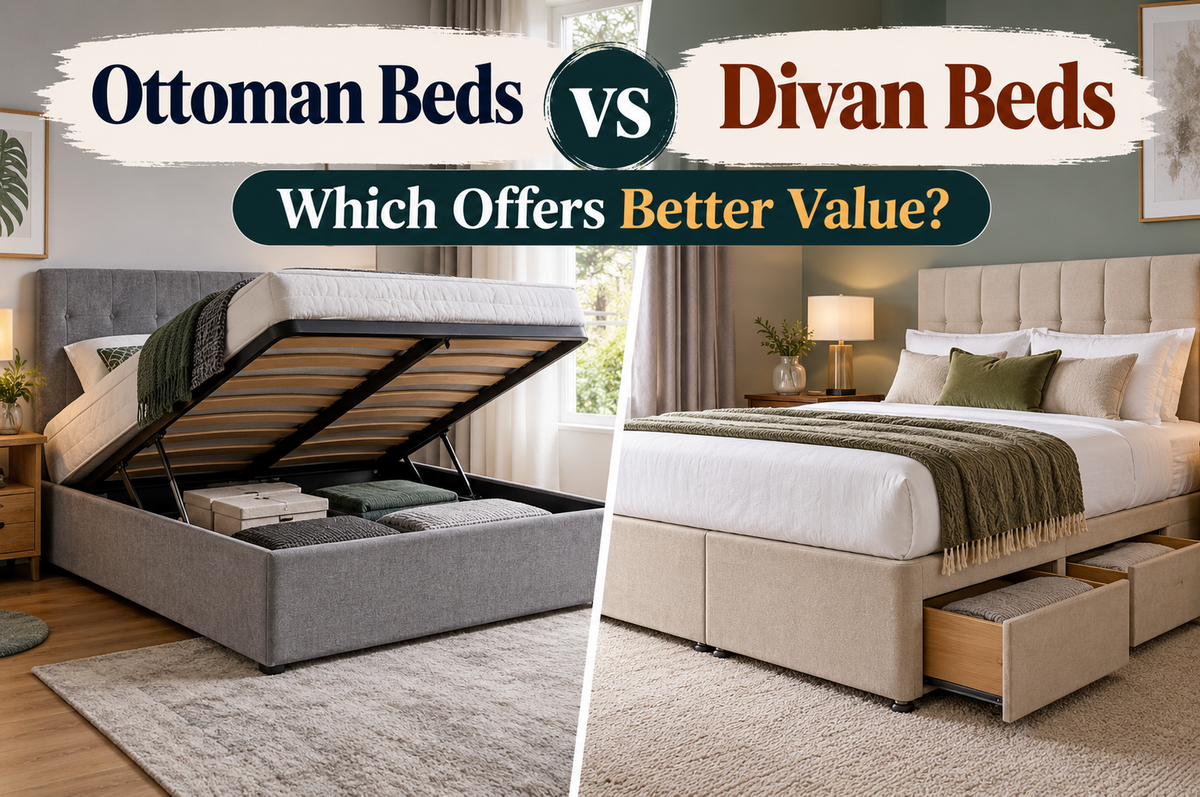
An ottoman bed uses a lifting mechanism to raise the mattress platform, revealing a storage compartment within the bed base.
This can be an excellent solution when wardrobe or cupboard space is limited.
Items commonly stored beneath an ottoman bed include:
-
Spare duvets and pillows.
-
Seasonal bedding.
-
Extra blankets and throws.
-
Folded clothing.
-
Towels and household linens.
-
Other lightweight bedroom essentials.
Unlike conventional drawers, which require space beside the bed to open, an ottoman mechanism provides access by lifting the mattress platform.
However, you still need enough clearance to operate the mechanism safely, and the lifting direction should suit your bedroom layout.
If hidden storage is a priority, exploring upholstered ottoman beds can help you compare this style with more conventional frames.
Small-bedroom tip: Measure the full external dimensions of the bed, not just the mattress size. Upholstered side rails, headboards and footboards can increase the amount of floor space a frame occupies.
7. Soft Upholstered Edges Can Be More Forgiving
Anyone who's caught their shin on the corner of a solid wooden bed frame knows how unpleasant that can be.
Depending on the design, an upholstered bed may have padding over its side rails, corners and footboard.
This can make accidental contact with the frame less uncomfortable than bumping into an exposed hard edge.
It's a small detail, but potentially a welcome one in bedrooms with limited walking space.
That said, padding doesn't automatically make a bed childproof. Hard structural components remain underneath, and some upholstered frames still have firm corners or projecting legs.
If you're furnishing a family bedroom, consider the frame's overall shape, stability and exposed edges rather than assuming that fabric covering alone makes it safer.
Do the Benefits Outweigh the Drawbacks?
So far, upholstered beds sound rather appealing.
They're comfortable to lean against, visually versatile and capable of bringing a luxurious finish to an otherwise ordinary bedroom. Some even provide practical storage without compromising on style.
But fabric upholstery also introduces responsibilities that don't apply in quite the same way to exposed wooden or metal frames.
Dust can settle into textured surfaces. Spills may require prompt attention. Pets, sunlight and everyday friction can gradually affect the fabric's appearance.
And while a beautiful upholstered headboard can last for years, its longevity depends heavily on the materials and construction beneath that attractive exterior.
The important question isn't simply whether upholstered beds look good. It's whether their benefits suit the way you actually use your bedroom.
Understanding those trade-offs is essential before choosing your next bed.
What Are the Disadvantages of Upholstered Beds?
Upholstered beds certainly have their charms. Soft headboards, beautiful fabrics and elegant designs make them an attractive addition to almost any bedroom.
But there's another side to the story.
Unlike wooden or metal bed frames, fabric-covered furniture requires a little more thought when it comes to cleaning, everyday wear and long-term maintenance.
That doesn't necessarily make upholstered beds impractical. Far from it. It simply means understanding their limitations before investing in one.
Here are the main disadvantages of upholstered beds worth considering.
1. Upholstered Beds Can Collect Dust and Allergens
One of the most common concerns about fabric beds is their tendency to accumulate dust.
And it's a reasonable concern.
Textured upholstery provides surfaces where airborne particles, household dust, skin flakes and pet dander can settle. Over time, these particles may become trapped within the fabric's fibres, particularly around seams, decorative stitching and button-tufted detailing.
Wooden and metal frames have smoother, non-porous surfaces that are generally easier to wipe clean.
Upholstered frames, by comparison, usually need vacuuming.
Do upholstered beds collect more dust than wooden beds?
Fabric upholstery can retain more dust than a smooth wooden surface, although the amount depends on the material, room conditions and cleaning routine.
For example, a deeply buttoned velvet headboard may have more areas where dust accumulates than a simple, tightly woven upholstered panel.
This becomes particularly important for people who experience allergies or sensitivity to airborne particles.
Dust mites can live in upholstered furnishings under suitable conditions, feeding on shed skin cells. However, their presence isn't unique to fabric beds; mattresses, carpets and other soft furnishings can also provide suitable environments.
How to minimise dust accumulation:
-
Vacuum upholstered surfaces regularly using a suitable upholstery attachment.
-
Pay particular attention to seams, folds and decorative detailing.
-
Wash bedding according to its care instructions.
-
Keep the bedroom well ventilated and manage excessive humidity.
-
Avoid allowing dust to build up behind the headboard.
-
Choose simpler upholstery designs if easy cleaning is a priority.
Worth knowing: An upholstered bed isn't automatically unsuitable for allergy sufferers. However, someone with significant dust-mite allergies may find a smooth, wipe-clean frame easier to maintain.
2. Fabric Upholstery Is More Vulnerable to Stains
A cup of tea in bed. A splash of coffee. A dropped piece of chocolate.
Accidents happen.
Unfortunately, upholstered bed frames don't always forgive spills as easily as solid wood or painted metal.
Liquid can soak into certain fabrics, leaving visible marks or penetrating the padding beneath. Depending on the upholstery material, even plain water may produce a noticeable ring if it dries unevenly.
This is particularly relevant for lighter fabrics.
Cream, ivory and pale beige upholstered beds can look wonderfully elegant, but marks may be more noticeable against their lighter surfaces.
Darker colours can disguise some stains, although they aren't immune to spills, oils or discolouration.
The good news? Not all upholstery fabrics behave the same way.
Some tightly woven synthetic materials and specialist performance fabrics are designed to resist staining or make cleaning easier. Others require considerably more care.
Before buying, check:
-
Whether the upholstery has any stain-resistant treatment.
-
Which cleaning methods the manufacturer recommends.
-
Whether water-based cleaning products are suitable.
-
Whether the fabric is prone to watermarks.
-
Whether professional cleaning may be necessary.
Avoid assuming that a fabric described as durable is automatically stain-resistant.
Those are two different qualities.
A material can withstand years of friction while still being susceptible to staining.
3. Upholstered Beds Require More Regular Maintenance
A wooden bed frame can often be cleaned with a soft cloth and an appropriate surface cleaner.
Fabric upholstery is different.
Dust needs removing from the fibres. Stains may require specialist attention. Certain materials need gentle brushing to maintain their appearance.
This means upholstered bed maintenance generally involves more than an occasional wipe.
Fortunately, routine care doesn't have to be complicated.
For many fabric beds, a sensible maintenance routine involves:
-
Weekly or fortnightly: Lightly vacuuming accessible upholstered surfaces, adjusting frequency according to dust and pet hair.
-
When spills occur: Following the manufacturer's stain-removal guidance promptly.
-
Periodically: Checking seams, corners and areas exposed to frequent contact.
-
As needed: Arranging professional upholstery cleaning where the fabric's care requirements call for it.
Always check the manufacturer's cleaning instructions before applying water, detergent or upholstery sprays.
Certain fabrics can be damaged by unsuitable cleaning products, excessive moisture or vigorous scrubbing.
And remember: removable, machine-washable upholstery covers are not a standard feature of every upholstered bed.
If easy cleaning is essential, verify whether a particular model actually offers removable covers before purchasing.
4. Pets Can Be Tough on Upholstered Bed Frames
Sharing your home with a dog or cat changes the way you choose furniture.
A beautifully upholstered bed might seem like the perfect addition to your bedroom, but fabric can be particularly attractive to curious paws and claws.
Cats may scratch textured surfaces. Dogs can leave hair, dirt and occasional marks against the side rails. Some upholstery materials also trap loose fur more readily than others.
This doesn't mean pet owners should avoid upholstered beds altogether.
It means choosing the right fabric becomes especially important.
What makes an upholstered bed more pet-friendly?
Look for upholstery with:
-
A tight, relatively smooth weave.
-
Good resistance to everyday abrasion.
-
A surface that releases pet hair easily.
-
Appropriate cleaning instructions.
-
Minimal loose loops or delicate decorative threads.
Highly textured bouclé, for example, may be more vulnerable to snagging from claws than certain tightly woven fabrics.
Similarly, delicate upholstery can show damage when pets repeatedly jump against or scratch the frame.
Velvet presents a more nuanced choice. Some short-pile synthetic velvets are relatively easy to brush or vacuum, while others may show paw marks, flattened pile or scratches.
Practical tip: If you have pets, request a fabric sample where available. Testing how easily hair brushes away can reveal more than a product photograph.
5. Upholstery Can Fade, Pill or Wear Over Time
Even a well-made upholstered bed won't necessarily look identical after years of daily use.
Fabric is subject to natural wear.
Areas that experience regular contact, such as the headboard where you lean back or the side rails where you sit, may gradually change in appearance.
Depending on the material, you might notice:
-
Pilling: Small balls of fibre forming on the fabric surface.
-
Flattened pile: Velvet or chenille developing areas that appear smoother or darker.
-
Fading: Colour gradually changing following prolonged exposure to sunlight.
-
Snagging: Threads catching on jewellery, clothing or pet claws.
-
Abrasion: Surface fibres wearing down through repeated friction.
-
Loose stitching: Decorative seams or details becoming less secure.
These changes don't always indicate poor manufacturing quality.
Some are natural characteristics of particular textiles.
For example, velvet's directional pile can create temporary shading or pressure marks without the fabric being permanently damaged.
However, significant premature wear may suggest unsuitable upholstery, weak construction or inadequate care.
If upholstered bed durability is a priority, pay attention to the fabric's composition, abrasion resistance and care requirements rather than choosing purely by appearance.
6. Upholstered Beds Can Be More Difficult to Repair
A scratched wooden bed frame may sometimes be sanded, refinished or touched up.
A metal frame with minor paint damage might be relatively straightforward to repair.
Upholstered furniture can be more complicated.
A tear, deep stain or damaged padded section may require specialist upholstery work, particularly when the fabric is permanently attached to the frame.
Replacing one section isn't always simple, either.
Matching the original fabric colour and texture can become difficult if the material has faded or is no longer available.
This makes construction quality and fabric selection important long-term considerations.
Before purchasing, it's worth finding out whether replacement components are available and what the manufacturer's warranty covers.
A warranty may protect against certain manufacturing defects without covering accidental damage, staining or ordinary fabric wear.
Pros and Cons of Upholstered Beds: A Side-by-Side Comparison
Now that we've explored both sides, how do the advantages and disadvantages compare?
| Advantages | Disadvantages |
|---|---|
| Soft, padded headboards offer comfortable back support when used with suitable pillows | Upholstery can collect dust and allergens |
| Wide range of colours, textures and styles | Some fabrics are vulnerable to staining |
| Creates a cosy, luxurious bedroom appearance | Requires regular vacuuming and fabric care |
| Fabric-covered edges can feel softer than exposed hard frames | Pets may scratch or snag the upholstery |
| Some designs include useful hidden storage | Fabric can fade, pill or wear with use |
| Can complement both modern and traditional interiors | Repairs and reupholstery may be more complicated |
| Different headboard designs offer decorative flexibility | Large padded frames can occupy additional space |
Who Should Consider an Upholstered Bed?
An upholstered bed may be a particularly good choice if you:
-
Enjoy reading or relaxing against a padded headboard.
-
Want your bed to become a prominent bedroom design feature.
-
Prefer soft textures and a cosy atmosphere.
-
Appreciate a wide choice of upholstery colours and styles.
-
Are comfortable maintaining fabric furniture.
-
Want an upholstered design with optional storage features.
Who Might Prefer an Alternative?
A wooden or metal frame may be more suitable if you:
-
Want furniture that can be wiped clean quickly.
-
Have severe dust-related allergies and prefer minimal upholstered surfaces.
-
Own pets that frequently scratch furniture.
-
Need a particularly compact frame with minimal external padding.
-
Prefer exposed natural materials over fabric finishes.
Another option worth considering is a divan-style bed, particularly if you favour a compact base and practical storage configurations.
Depending on the model, divan beds can provide an alternative to a fully upholstered bedstead, although fabric-covered divans still require appropriate upholstery care.
Ultimately, there isn't one perfect bed for every household.
The best choice is the one that suits your daily habits, bedroom dimensions and expectations for long-term maintenance.
What Materials Are Upholstered Beds Made From?
Choosing an upholstered bed isn't simply a matter of picking a colour.
The fabric itself influences how the bed looks, feels, ages and responds to everyday use.
A plush velvet headboard creates a very different experience from a crisp woven linen finish. Meanwhile, textured bouclé can introduce character but may demand more careful maintenance.
Understanding these differences is an essential part of any upholstered bed buying guide.
Let's examine the most common upholstery materials.
Velvet Upholstered Beds: Soft, Rich and Luxurious
Velvet is one of the most recognisable upholstery finishes associated with luxurious bedroom furniture.
Its short, dense pile creates a smooth surface with a distinctive sheen. As light moves across the material, the colour can appear to shift, giving velvet a sense of depth.
A velvet upholstered bed can look particularly striking in jewel tones, charcoal, soft grey or warm neutral shades.
Advantages of velvet upholstery:
-
Soft, tactile surface.
-
Rich appearance and attractive light reflection.
-
Suitable for both contemporary and traditional bedroom styles.
-
Available in different fibre compositions and finishes.
Potential disadvantages:
-
Some velvets show pressure marks or directional shading.
-
Pet hair and dust may be visible on certain colours.
-
The pile can flatten in frequently touched areas.
-
Cleaning requirements vary significantly between velvet types.
Not all velvet is created equal.
Cotton velvet, polyester velvet and other synthetic blends can behave differently in terms of stain resistance, abrasion and maintenance.
If you love the appearance of velvet but want something practical, investigate the specific fabric composition rather than relying on the word velvet alone.
Linen Upholstered Beds: Relaxed and Timeless
Linen has a naturally understated appeal.
Its characteristic woven texture creates a relaxed look that works beautifully with pale walls, wooden furniture and soft, neutral bedding.
A linen upholstered bed can be an excellent choice for Scandinavian-inspired, coastal or minimalist bedrooms.
However, there's an important distinction between genuine linen and linen-look upholstery.
Genuine linen is made from flax fibres, while linen-effect fabrics may contain polyester, cotton or other materials designed to imitate its appearance.
These fabrics can differ considerably in durability, creasing and cleaning requirements.
Advantages of linen and linen-look upholstery:
-
Natural-looking texture.
-
Understated, versatile appearance.
-
Particularly effective in neutral colour schemes.
-
Wide range of woven finishes.
Potential disadvantages:
-
Genuine linen may crease or wrinkle.
-
Some weaves absorb stains readily.
-
Loose textures can be vulnerable to snagging.
-
Cleaning suitability depends on fibre composition.
For a busy household, a durable linen-effect synthetic fabric may be more practical than a delicate natural linen.
The key is checking what the upholstery is actually made from.
Bouclé Upholstered Beds: Textured and Contemporary
Bouclé has become a distinctive choice in contemporary furniture design.
Recognisable by its looped or curled yarns, it creates a soft, highly textured surface that adds interest without needing bright colours or elaborate patterns.
Cream and off-white bouclé beds can produce a particularly cosy, sculptural appearance.
But that texture comes with practical considerations.
Advantages of bouclé upholstery:
-
Distinctive tactile finish.
-
Adds depth to simple bedroom schemes.
-
Creates a soft, contemporary appearance.
-
Works well with curved and generously padded headboards.
Potential disadvantages:
-
Looped yarns may catch on claws or sharp objects.
-
Crumbs, dust and debris can settle between textured fibres.
-
Certain bouclé fabrics can be difficult to spot-clean.
-
The surface may become fuzzy or worn in high-contact areas.
Bouclé isn't necessarily a poor choice for everyday use. Its suitability depends on the tightness of the weave, fibre composition and quality of construction.
However, households with cats that scratch furniture may want to consider smoother alternatives.
Chenille Upholstered Beds: Plush and Inviting
Chenille upholstery is known for its soft, slightly fuzzy texture.
The yarn construction creates a plush finish that can feel inviting without having quite the same reflective appearance as velvet.
Chenille beds can work well in both traditional and modern bedrooms, especially when paired with generously padded headboards.
Advantages of chenille:
-
Soft, comfortable texture.
-
Attractive depth and visual warmth.
-
Available in a variety of colours and woven patterns.
-
Can create a luxurious appearance without a pronounced sheen.
Potential disadvantages:
-
Some chenille fabrics show pressure or pile changes.
-
Loose yarn constructions may snag.
-
Certain types are susceptible to abrasion.
-
Cleaning instructions vary by fibre composition.
For regular use, look for upholstery designed specifically for furniture rather than assuming every chenille fabric offers the same level of durability.
Leather and Faux Leather Upholstered Beds
Although fabric beds dominate many upholstered bedroom collections, leather and faux leather are also upholstery options.
These materials offer a different visual character, often creating a sleeker and more structured appearance.
Genuine leather develops natural changes over time, while faux leather uses a manufactured surface designed to resemble leather.
Potential advantages:
-
Many finishes are relatively easy to wipe clean.
-
Smooth surfaces don't trap dust in the same way as textured woven fabrics.
-
Can suit modern and minimalist bedrooms.
Potential disadvantages:
-
Some surfaces may scratch or mark.
-
Faux leather can crack or peel as it ages, depending on its quality.
-
Genuine leather may require specialist conditioning.
-
Temperature and tactile feel differ from woven upholstery.
If you prefer the softness and visual warmth of textiles, fabric upholstery may be more appealing.
If quick surface cleaning is your main priority, a suitable leather or faux-leather finish could be worth considering.
Which Upholstered Bed Fabric Is Best?
There isn't a single material that outperforms every other option.
The best fabric for upholstered beds depends on how the furniture will be used and what you value most.
| Fabric type | Main appeal | What to consider | Often suited to |
|---|---|---|---|
| Velvet | Rich, soft appearance | Pile marks, fabric-specific cleaning | Luxurious bedroom designs |
| Linen or linen-look | Relaxed woven texture | Creasing, stains and weave durability | Natural, minimalist interiors |
| Bouclé | Distinctive looped texture | Snagging and debris between fibres | Contemporary statement beds |
| Chenille | Plush, inviting finish | Pile changes and abrasion | Cosy, comfortable bedrooms |
| Tightly woven polyester | Potentially practical everyday finish | Quality and stain resistance vary | Busy households |
| Leather or faux leather | Smooth, structured appearance | Scratching, cracking and material-specific care | Modern, easy-wipe interiors |
What Is the Most Durable Upholstery Fabric?
A tightly woven, furniture-grade fabric with good abrasion resistance is often a sensible starting point.
However, durability cannot be determined by fabric name alone.
Two polyester fabrics, for example, may perform very differently depending on their yarns, weave, finishing treatments and manufacturing quality.
When comparing upholstered bed materials, consider:
-
Abrasion resistance: How well the fabric withstands repeated rubbing and contact.
-
Pilling resistance: Whether the surface is likely to develop small fibre balls.
-
Colourfastness: How well the material retains its colour when exposed to light or cleaning.
-
Snag resistance: Particularly important for households with pets.
-
Cleaning compatibility: Whether everyday marks can be treated using appropriate methods.
-
Fabric construction: Whether the weave feels secure and suitable for furniture upholstery.
Where available, ask about upholstery performance testing and request a fabric sample.
A small sample allows you to assess texture, colour and weave more accurately than an online photograph.
Which Fabric Is Best for Homes With Pets?
For many pet owners, a relatively smooth, tightly woven upholstery fabric is a practical option.
Loose loops and delicate surface threads may be more vulnerable to claws.
Similarly, highly textured fabrics can make removing embedded pet hair more time-consuming.
That said, no upholstered fabric is completely scratch-proof.
If your cat regularly scratches furniture, even a durable upholstery material may eventually show damage.
Consider how your pets behave rather than simply choosing a fabric marketed as pet-friendly.
A dog that occasionally sleeps beside the bed creates different demands from a cat that enjoys climbing and scratching the headboard.
Which Fabric Is Easiest to Clean?
The easiest-to-clean fabric is generally one with clear, practical care instructions and a surface that doesn't readily retain dirt.
Certain tightly woven synthetic upholstery fabrics can offer convenient everyday maintenance, particularly when manufactured with suitable stain-resistant finishes.
But always verify the actual cleaning guidance.
A fabric that looks smooth may still react badly to water, while a textured fabric may have a specialist treatment that makes spot cleaning more manageable.
The most practical buying approach is to balance three factors: appearance, durability and maintenance.
Choosing solely for looks can lead to disappointment. Choosing solely for practicality may leave you with a bed that doesn't suit your bedroom.
The ideal material offers a comfortable compromise between the two.
Upholstered Beds vs Wooden and Metal Beds: Which Is Better?
An upholstered bed isn't the only way to create a stylish bedroom.
Wooden and metal frames remain popular for good reasons, and each construction style brings its own advantages.
The right comparison goes beyond appearance.
Think about comfort, maintenance, durability, weight, available space and how the frame will fit into your daily routine.
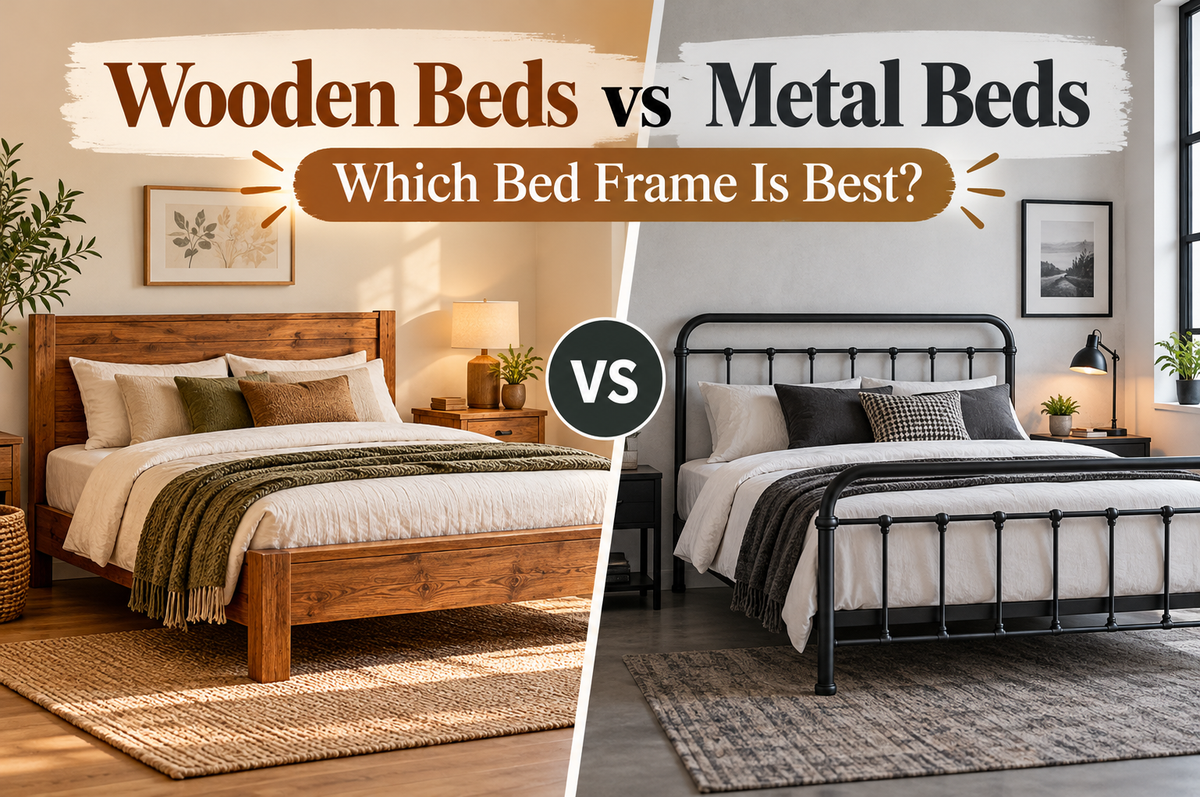
Upholstered Beds vs Wooden Beds
Wooden bed frames are appreciated for their natural appearance and relatively straightforward maintenance.
Depending on the timber, finish and construction, they can complement traditional, rustic, Scandinavian or contemporary interiors.
Upholstered beds, meanwhile, offer a softer visual finish and usually provide a cushioned headboard.
| Feature | Upholstered bed | Wooden bed |
|---|---|---|
| Headboard comfort | Usually padded | Usually firm unless cushions are added |
| Appearance | Soft, textured and fabric-led | Natural, structured and timber-led |
| Cleaning | Requires fabric-appropriate care | Often suitable for wiping or dusting |
| Stain concerns | Fabric may absorb spills | Depends on the wood finish |
| Design flexibility | Wide variety of fabrics and colours | Variety of timber types, stains and finishes |
| Long-term wear | Upholstery can fade, pill or snag | Wood can scratch, dent or develop finish damage |
| Repairability | Fabric repairs may require specialist work | Some wooden surfaces can be refinished |
Which should you choose?
If you value a soft headboard and luxurious fabric finish, an upholstered bed may be the stronger option.
If you prioritise straightforward cleaning, visible natural materials and potentially easier surface refinishing, a wooden frame may be preferable.
Neither is automatically more durable.
A well-made upholstered frame can outlast a poorly constructed wooden one, just as a solid wooden frame may remain usable long after lower-quality upholstery begins to deteriorate.
Construction quality matters enormously.
Upholstered Beds vs Metal Beds
Metal bed frames offer another alternative.
Their appearance can range from traditional decorative designs to simple, minimalist structures.
Many feature relatively slim rails and exposed frames, which can make them visually lighter than generously padded upholstered beds.
| Feature | Upholstered bed | Metal bed |
|---|---|---|
| Visual appearance | Soft and substantial | Often slim and structured |
| Headboard feel | Usually cushioned | Typically hard |
| Cleaning | Vacuuming and upholstery care | Usually wiping and dusting |
| Fabric wear | Possible fading, pilling and staining | Not applicable to exposed metal |
| Surface damage | Snags or fabric tears | Scratches, chipped finishes or corrosion |
| Frame noise | Depends on construction and joints | Depends on construction and joints |
| Style | Fabric textures and padded detailing | Industrial, classic or minimalist designs |
One common misconception is that upholstered beds are always quieter than metal beds.
In reality, squeaking is usually associated with frame movement, loose connections, worn fittings or contact between components.
A properly assembled metal bed can be quiet, while a poorly assembled upholstered frame may still develop unwanted noise.
Upholstery may soften certain contact sounds, but it cannot compensate for weak joints or inadequate structural support.
So, Which Bed Frame Material Wins?
It depends on what matters most to you.
-
Choose upholstered if comfort, soft textures and decorative versatility are your priorities.
-
Choose wooden if you favour natural materials, straightforward cleaning and a classic appearance.
-
Choose metal if you prefer exposed, structured designs and potentially slimmer frame profiles.
There's no universal winner.
A bed should look good, certainly. But it should also fit your bedroom, support your mattress properly and suit the way you live.
And that brings us to an important consideration: how much effort does an upholstered bed actually require to keep clean, comfortable and looking its best?
Are Upholstered Beds Difficult to Clean?
One of the biggest questions people ask before buying a fabric bed is whether keeping it clean will become a constant chore.
The reassuring answer? Most upholstered beds are relatively straightforward to maintain, provided you choose a suitable fabric and follow the manufacturer's care instructions.
They do require more attention than a simple wooden or metal frame. But that doesn't mean spending hours scrubbing your headboard every weekend.
A little consistent care can make a significant difference.
How to Clean an Upholstered Bed Frame
The best approach to upholstered bed cleaning is gentle, regular maintenance rather than aggressive cleaning once dirt has built up.
Here's a practical routine to follow.
-
Check the fabric care instructions. Before doing anything else, identify which cleaning methods are suitable for your upholstery. Some fabrics tolerate water-based treatments, while others require specialist cleaning.
-
Vacuum the headboard. Use a soft upholstery attachment and low suction where appropriate. Pay particular attention to seams, corners and decorative detailing.
-
Clean the side rails and footboard. These areas can collect dust, clothing fibres and pet hair, especially near the floor.
-
Remove loose debris. A suitable soft brush or fabric-safe lint remover can help with surface particles, depending on the material.
-
Treat spills carefully. If the manufacturer's instructions permit, gently blot fresh spills with a clean, absorbent cloth. Avoid rubbing, which may spread the stain or damage the fibres.
-
Allow cleaned areas to dry properly. Excessive moisture can penetrate padding and create unpleasant odours or other problems.
Never saturate upholstered furniture with water unless the manufacturer specifically confirms that the cleaning method is appropriate.
Likewise, avoid applying household detergents, steam cleaners or fabric protection sprays without checking compatibility.
Upholstery care tip: Test any manufacturer-approved cleaning product on a discreet area first. Even products marketed for fabric furniture can cause colour changes, watermarks or texture damage on certain materials.
How Often Should You Clean an Upholstered Headboard?
For many households, vacuuming upholstered surfaces approximately once a week or every fortnight is a sensible starting point.
However, the ideal frequency depends on your circumstances.
A bedroom used by someone with dust allergies may benefit from more frequent attention. The same applies to homes with pets that regularly enter the bedroom.
Conversely, a lightly used guest bedroom may need less frequent cleaning.
The important thing is preventing dust and debris from accumulating over long periods.
Regular maintenance is generally easier than attempting to remove months of embedded dirt.
How Do You Protect an Upholstered Headboard?
Prevention is often the simplest form of upholstery care.
A few everyday habits can help maintain your bed's appearance:
-
Avoid placing uncovered drinks directly against upholstered surfaces.
-
Keep the headboard away from prolonged direct sunlight where possible.
-
Use pillows to reduce repeated contact between hair products and upholstery.
-
Keep pets' claws trimmed and provide appropriate scratching alternatives.
-
Vacuum decorative seams before dust becomes embedded.
-
Avoid placing damp clothing or towels against fabric-covered surfaces.
If your bedroom receives strong afternoon sunlight, curtains or blinds may help reduce long-term fabric fading.
And if you're considering a fabric protector, always confirm that it's suitable for the upholstery and won't affect the manufacturer's warranty.
Are Upholstered Beds Suitable for Allergy Sufferers?
Fabric furniture and allergies are often discussed together, sometimes with more alarm than necessary.
The reality is a little more nuanced.
Upholstered beds can collect dust, skin flakes and other particles. Under suitable conditions, upholstered surfaces may also harbour dust mites.
For people sensitive to dust-mite allergens, this can be an important consideration.
However, upholstered beds don't automatically cause allergies, and removing a fabric headboard won't necessarily eliminate allergens from a bedroom.
Mattresses, bedding, carpets and curtains can all contribute to indoor allergen exposure.
Can You Have an Upholstered Bed If You Have Dust Allergies?
Potentially, yes.
But your decision should depend on the severity of your symptoms and how easily you can maintain the upholstery.
If you're sensitive to dust, consider choosing:
-
A relatively smooth, tightly woven fabric.
-
A simple headboard without deep folds or extensive tufting.
-
Upholstery that can be vacuumed easily.
-
A bed frame that allows access for cleaning around and underneath it.
Keeping indoor humidity under control and regularly washing bedding may also help manage dust-mite exposure.
For people with significant allergies, a smooth wooden or metal frame may be the more practical option because it generally offers fewer fabric surfaces where particles can accumulate.
If allergies substantially affect your sleep or health, seek advice from an appropriate healthcare professional rather than relying on furniture choice alone.
Do Upholstered Beds Attract Bed Bugs?
This is another common concern.
Upholstered beds do not inherently attract bed bugs more than other bed types.
Bed bugs are primarily attracted to sleeping hosts through cues such as body heat and carbon dioxide, rather than a particular upholstery material.
However, upholstered frames can provide seams, folds and concealed areas where bed bugs may hide if an infestation occurs.
Wooden frames also have joints, cracks and crevices that can provide hiding places.
The practical difference is that heavily upholstered furniture may be more difficult to inspect and treat.
If you suspect bed bugs, appropriate identification and professional pest-control advice are more important than simply changing the bed frame.
Can Upholstered Beds Develop Mould?
Like other upholstered furniture, fabric beds can develop mould when exposed to persistent dampness or excessive humidity.
The upholstery itself doesn't create mould. Moisture is the underlying problem.
Potential risk factors include:
-
Poor bedroom ventilation.
-
Condensation on cold external walls.
-
Damp surfaces behind a headboard.
-
Water spills that penetrate padding.
-
Persistently high indoor humidity.
Avoid pushing a large upholstered headboard tightly against a visibly damp wall.
If mould develops, identify and address the moisture source. Extensive mould within padding may require specialist assessment or replacement rather than ordinary surface cleaning.
How Long Do Upholstered Beds Last?
An upholstered bed is more than a decorative purchase.
It's furniture you expect to use every night, potentially for many years.
So, how long should an upholstered bed frame last?
There isn't one reliable lifespan that applies to every model.
A well-constructed upholstered bed can provide many years of service, but its longevity depends on several interconnected factors.
What Affects Upholstered Bed Durability?
1. Internal frame construction
The underlying structure is one of the most important factors.
A sturdy frame with secure joints and appropriate support is less likely to develop movement or instability through normal use.
2. Mattress support
The slats or platform must support the mattress correctly.
Inadequate support can contribute to movement, premature wear and problems with the mattress itself.
3. Upholstery quality
Durable, furniture-grade fabric is generally better suited to repeated everyday contact than delicate decorative textiles.
4. Padding quality
Padding can compress or lose its shape over time.
Headboards that receive frequent pressure may show changes sooner than purely decorative upholstered sections.
5. Everyday use
A bed used nightly by two adults will experience different demands from a guest bed used occasionally.
6. Maintenance
Regular cleaning, careful handling and prompt attention to loose fittings can help preserve both appearance and function.
How Can You Make an Upholstered Bed Last Longer?
You don't need a complicated maintenance schedule.
A few sensible habits go a long way.
-
Assemble the frame according to the manufacturer's instructions.
-
Check and tighten accessible fittings when recommended.
-
Use a compatible mattress.
-
Avoid exceeding the stated weight capacity.
-
Don't repeatedly sit or stand on unsupported sections.
-
Protect upholstery from prolonged sunlight and moisture.
-
Clean spills using the correct fabric-care method.
-
Avoid dragging the bed across the floor when moving it.
If your bed begins squeaking or moving unexpectedly, investigate the cause rather than assuming the upholstery is responsible.
Loose fittings, uneven flooring or damaged support components may be contributing factors.
Remember: A bed's structural lifespan and the lifespan of its upholstery aren't necessarily identical.
The frame may remain perfectly functional even after the fabric begins showing cosmetic wear.
What Should You Consider Before Buying an Upholstered Bed?
By now, you should have a clearer understanding of the benefits, drawbacks and fabric options.
But knowing what upholstered beds offer is only half the buying decision.
The next step is finding a design that works in your bedroom, fits your mattress and suits your everyday routine.
Here's what to check before placing an order.
1. Measure Your Bedroom Properly
It's surprisingly easy to underestimate the space a bed occupies.
A standard UK double mattress measures approximately 135 × 190 cm, but the external dimensions of an upholstered double bed can be considerably larger.
Padding, side rails, headboard wings and footboards all add to the overall footprint.
Before buying, measure:
-
The available floor space.
-
The distance between the bed and surrounding furniture.
-
Clearance around doors and wardrobes.
-
Headboard height against windows or sloping ceilings.
-
Access through staircases, hallways and doorways.
-
Space needed for any storage mechanism.
Don't rely solely on the mattress dimensions listed in a product description.
Always check the bed's full external width, length and height.
2. Choose the Right UK Bed Size
An upholstered bed should provide enough sleeping space without dominating the room.
Here are the standard dimensions for common UK mattress sizes.
| UK bed size | Standard mattress dimensions | General consideration |
|---|---|---|
| Small single | 75 × 190 cm | Compact rooms and children's bedrooms |
| Single | 90 × 190 cm | Individual sleepers and guest rooms |
| Small double | 120 × 190 cm | Smaller bedrooms and occasional shared use |
| Double | 135 × 190 cm | Standard double bedrooms |
| King | 150 × 200 cm | Couples wanting additional sleeping space |
| Super king | 180 × 200 cm | Spacious bedrooms and generous sleeping areas |
These are mattress measurements, not guaranteed upholstered frame dimensions.
Some beds feature particularly thick side rails or wide headboards, so allow extra room accordingly.
3. Check Mattress Compatibility
Most upholstered bed frames are designed to accommodate standard mattress sizes, but compatibility shouldn't be assumed.
Check the manufacturer's specifications for:
-
Mattress width and length.
-
Suitable mattress depth.
-
Slatted or platform support.
-
Maximum supported weight.
-
Any restrictions relating to mattress construction.
This is especially important when purchasing an ottoman bed, where mattress weight may affect the operation of the lifting mechanism.
A very heavy mattress may not be suitable for every gas-lift system.
If you're keeping your existing mattress, verify its dimensions before ordering a new frame.
4. Think About Storage Before Choosing a Design
An attractive bed can quickly become frustrating if it doesn't provide the practicality your bedroom needs.
For example, a large upholstered frame may look beautiful, but could reduce the amount of accessible floor space in a smaller room.
If storage is limited, consider whether a lift-up ottoman base or another storage configuration would be more useful.
Also think about how frequently you'll need access.
A compartment used for spare duvets may only need opening occasionally. Storage intended for everyday clothing should be convenient to access regularly.
And don't overlook ventilation.
Stored belongings should be clean and dry, and any manufacturer's guidance on loading, airflow and compartment capacity should be followed.
5. Consider Your Lifestyle Before Choosing Fabric
The most beautiful fabric isn't always the most suitable one.
A pale bouclé headboard might be perfect in a carefully styled guest room, but less practical in a household with energetic pets.
A plush velvet finish might create the luxurious atmosphere you want, yet require more attention to pile marks than a simpler woven material.
Ask yourself:
-
Do pets regularly enter the bedroom?
-
Are young children likely to use the bed?
-
Do I often eat or drink while sitting in bed?
-
Am I sensitive to dust?
-
How much time am I willing to spend cleaning upholstery?
-
Will the bed receive direct sunlight?
These questions may sound mundane.
But they're often more useful than choosing furniture purely because it looks impressive in a photograph.
6. Examine the Headboard Design
An upholstered headboard can transform a bedroom, but proportions matter.
A very tall design creates visual impact, while a lower headboard can feel more understated.
Consider whether you want:
-
A simple padded panel.
-
Vertical or horizontal channel stitching.
-
Traditional button-tufted detailing.
-
A wingback silhouette.
-
A broad, generously cushioned headboard.
-
A streamlined contemporary finish.
Also consider your sleeping and sitting habits.
If you enjoy reading in bed, headboard padding and usable height may matter more than decorative stitching.
If your bed sits beneath a window, a tall headboard could obstruct natural light.
The best headboard should complement both your bedroom layout and how you actually use the bed.
7. Look Beyond the Purchase Price
Are upholstered beds expensive?
They can be, but not necessarily.
Prices vary considerably depending on the frame materials, upholstery, headboard complexity, size and storage features.
A relatively simple fabric bed may be more affordable than a premium solid-wood frame, while a large, elaborately upholstered design can cost considerably more.
Rather than focusing solely on the initial price, consider the overall value.
Think about:
-
Structural construction.
-
Upholstery quality.
-
Mattress support.
-
Warranty terms.
-
Delivery and assembly requirements.
-
Cleaning and maintenance needs.
-
Potential repair costs.
A cheaper bed isn't always better value if its frame or upholstery deteriorates prematurely.
Equally, paying more doesn't automatically guarantee superior quality.
Look for clear product specifications and features that genuinely matter to you.
8. Check Delivery, Assembly and Warranty Information
An upholstered bed is a substantial piece of furniture.
Before ordering, confirm how it will arrive and whether assembly is required.
Large headboards can be awkward to manoeuvre through narrow staircases or tight doorways.
Measure access points carefully, particularly if you're choosing a super king bed or an oversized wingback design.
You should also check:
-
Delivery arrangements.
-
Whether the frame arrives in separate sections.
-
Assembly instructions and requirements.
-
Warranty coverage.
-
Returns information.
-
Procedures for reporting damage or missing components.
These details may not be as exciting as choosing your favourite fabric, but they can make the buying experience considerably smoother.
Upholstered Bed Buying Checklist
Before making your final decision, use this quick checklist.
-
I've measured the bedroom and checked the bed's external dimensions.
-
I've chosen the correct UK mattress size.
-
I've confirmed mattress and base compatibility.
-
I've considered whether I need under-bed storage.
-
I've selected upholstery suitable for my household.
-
I've checked the fabric's cleaning requirements.
-
I've considered pets, allergies and everyday wear.
-
I've checked the frame construction and support system.
-
I've confirmed the headboard will fit the available wall space.
-
I've reviewed delivery, assembly, warranty and returns information.
If you can confidently tick each box, you're in a much stronger position to choose an upholstered bed you'll enjoy living with.
Are Upholstered Beds Worth It?
For many households, absolutely.
An upholstered bed can offer a wonderful combination of comfort, visual appeal and design flexibility.
The padded headboard makes sitting up in bed more pleasant, while the wide range of fabrics and styles allows you to create a bedroom that feels distinctly your own.
And with the right configuration, an upholstered bed can offer useful storage alongside its decorative appeal.
But it's important to be realistic.
Fabric-covered furniture needs regular care. Some materials stain more easily than others. Pets can damage delicate textures, and upholstery may eventually show signs of wear.
An upholstered bed is worth buying when its comfort, appearance and features justify the maintenance you're willing to provide.
If you value softness and bedroom aesthetics, the advantages may easily outweigh the disadvantages.
If you want furniture that requires almost no fabric care, a wooden or metal alternative might suit you better.
Ultimately, the best bed isn't simply the most fashionable one.
It's the one that helps create a bedroom you enjoy using every day.
Frequently Asked Questions About Upholstered Beds
Are upholstered beds comfortable?
Yes, upholstered beds can be very comfortable, particularly when they feature a generously padded headboard.
The cushioning provides a softer surface for leaning back while reading or relaxing.
However, sleeping comfort depends primarily on the mattress and its support system rather than the upholstery covering the frame.
Are upholstered beds hard to maintain?
Not necessarily.
Most fabric beds benefit from regular vacuuming and prompt attention to spills.
The amount of maintenance required depends on the upholstery material, bedroom environment and how the bed is used.
Smooth, tightly woven fabrics may be easier to maintain than heavily textured or deeply tufted designs.
Do upholstered beds collect dust?
Yes, fabric upholstery can retain household dust and other particles.
Regular vacuuming helps prevent excessive accumulation.
If you have significant dust allergies, a simpler upholstered design or a smooth wooden or metal frame may be easier to keep clean.
Are upholstered beds good for small bedrooms?
They can be, provided you choose appropriate dimensions.
A streamlined upholstered frame may work well in a compact room, while a large wingback headboard or thick padded side rails could make the space feel crowded.
Always measure the full external dimensions.
Storage designs can also be useful when cupboard space is limited.
Do upholstered beds make you hot?
An upholstered bed frame doesn't generally determine how warm you feel while sleeping.
Temperature regulation is influenced more directly by your mattress, bedding, room temperature and individual preferences.
Fabric-covered headboards may feel warmer to the touch than exposed metal, but this doesn't necessarily mean the bed will cause overheating.
Do upholstered beds squeak?
They can, but squeaking isn't an inherent characteristic of upholstered beds.
Noise is more commonly associated with loose fittings, frame movement, worn joints or problems with the support system.
Proper assembly and periodic checks can help reduce unwanted movement and noise.
Can you replace the fabric on an upholstered bed?
Sometimes.
Certain upholstered frames can be professionally reupholstered, but feasibility depends on the construction, fabric attachment method and cost.
Some designs are considerably easier to reupholster than others.
Before attempting repairs, check whether the manufacturer offers replacement components or recommends a particular repair procedure.
What is the best upholstered bed fabric for pets?
A tightly woven, relatively smooth and durable fabric is often a practical choice.
Loose-loop materials can be more vulnerable to snagging, while delicate upholstery may show claw damage.
No fabric is completely pet-proof, so consider your pet's behaviour alongside the material's durability and cleaning requirements.
Are upholstered beds better than wooden beds?
Neither is universally better.
Upholstered beds provide softer headboards and a wider variety of fabric textures, while wooden beds generally offer easier surface cleaning and a natural finish.
Your decision should reflect your preferred appearance, maintenance expectations and the quality of the specific frame.
Do upholstered beds need special mattresses?
Usually not.
Many upholstered bed frames accommodate standard UK mattress sizes.
However, you should always check the manufacturer's mattress compatibility guidance, particularly for slatted bases, ottoman mechanisms and frames with specific weight restrictions.
Can upholstered beds develop unpleasant odours?
Yes, upholstery can retain odours from spills, moisture, pets or other sources.
Regular cleaning, good ventilation and keeping the fabric dry can help.
If an odour persists, investigate the underlying cause rather than attempting to mask it with fragrance sprays.
Are upholstered beds safe for children?
An upholstered bed may have softer padded edges than some exposed wooden or metal designs, but this doesn't automatically make it safer.
Check the frame's stability, suitability for the child's age, exposed corners, mattress fit and manufacturer guidance.
For young children, age-appropriate bed design and safe sleeping arrangements are more important than upholstery alone.
Final Thoughts: Choosing an Upholstered Bed That Works for You
An upholstered bed can do much more than provide somewhere to sleep.
It can soften a room, introduce beautiful texture, offer a comfortable place to relax and turn an ordinary bedroom into a space that feels thoughtfully designed.
But good looks shouldn't be the only deciding factor.
Think about how you'll use the bed. Consider whether you have pets, how often you're willing to clean the upholstery and whether you need additional storage.
Pay attention to frame construction, mattress support and fabric quality.
And above all, choose a design that suits your home rather than one that simply looks appealing in a showroom.
At Sovo Beds, we believe choosing a bed should be about finding the right balance between style, comfort and everyday practicality.
Whether you're drawn to a plush padded headboard, an understated fabric finish or a practical storage design, taking time to understand the pros and cons will help you make a more informed decision.
Ready to find a bed that suits your bedroom? Explore the styles, sizes and configurations available at Sovo Beds, compare the details that matter to you and choose a design you'll look forward to coming home to.
Because a beautiful bedroom is lovely.
But a beautiful bedroom that genuinely works for your life? That's even better.